Your laundry smells. You open the door and are hit with that distinct, sour note of mildew. You restart the cycle. You run an empty rinse. Nothing works. The problem isn’t your detergent dose or a broken drain pump. It is something far more mundane and far more annoying.
It is a fold in the rubber seal.
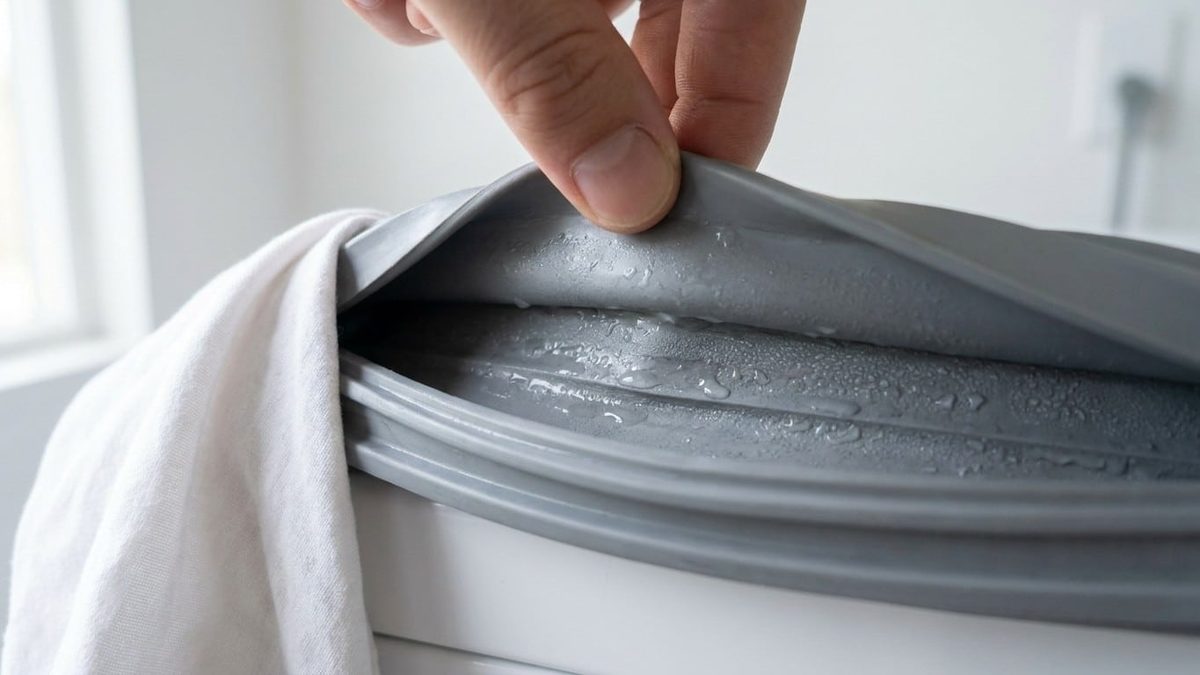
This tiny crease is invisible when the machine is closed. Water pools there after every wash. It never drains. That stagnant pocket becomes a breeding ground for bacteria. You are fighting a losing battle against a biofilm hiding in plain sight.
The Hidden Culprit: The Door Gasket
The rubber door seal, or gasket, is designed to absorb shock. It is not designed to drain. After a cycle finishes, a small amount of water remains trapped in the lower lip of the seal. If you slide your finger under that rubber edge, you will likely find a slimy, black deposit. That is biofilm.
Biofilm is a colony of anaerobic bacteria. They thrive in dark, wet environments. The residual water in the gasket fold provides the perfect habitat. Surface cleaning with a dry cloth does nothing. You cannot reach the bacteria without physically separating the rubber layers.
Most people wipe the rim. They miss the interior fold. The bacteria survive. They multiply. The smell intensifies with every load.
Why Low Temperatures Make It Worse
Modern efficiency drives us to wash at 30°C or 40°C. This saves energy. It saves money. It also keeps your machine smelling worse.
Bacteria survive comfortably at these temperatures. Sterilization requires heat. Specifically, temperatures above 60°C. When you wash at low temps, you are not killing the colony in the gasket. You are feeding it. Each warm cycle adds nutrients and moisture to the existing biofilm. The smell seeps into the clean fabrics you just pulled out. It is a cycle of contamination.
The 30-Second Fix That Actually Works
You do not need a professional technician. You do not need harsh chemicals. You need a better habit.
After every wash, take a dry cloth. Wipe the drum. Then, and this is the critical part, lift the rubber seal. Pull it back. Wipe the hidden fold underneath. Remove the standing water. This takes thirty seconds.
“Lifting the seal to dry the interior fold is the single most effective way to prevent mold buildup in the gasket.”
Leave the door slightly ajar after the cycle. Leave the detergent drawer open too. Airflow is essential. Bacteria need stagnation and darkness to thrive. Starve them of both.
Monthly Deep Cleaning
Daily wiping prevents new growth. It does not remove established biofilm. If the smell has been present for months, you need a deeper intervention.
Run an empty cycle at 60°C or higher once a month. The heat breaks the bacterial colony. You can add white vinegar to the drum to help dissolve mineral deposits and kill remaining microbes. Avoid chlorine bleach for routine cleaning. Repeated use degrades the rubber over time, leading to cracks where grime accumulates even faster.
For the gasket itself, use a cloth soaked in hot water and vinegar. Slide it under the rubber folds. Scrub gently. This loosens the entrenched grime without damaging the material.
When Replacement Is the Only Option
Sometimes the damage is permanent. If black mold stains have penetrated the rubber matrix, scrubbing will not erase them. The smell will return immediately.
In this case, replace the gasket. A replacement seal costs far less than a new machine. On many modern models, you can swap it out yourself. It involves removing a retaining clip or screws. No plumbing expertise required.
Before you buy parts, check two other spots. The drain pump filter. The detergent dispenser drawer. Both can hold stagnant water and contribute to the odor. Clean them out. But if the door seal is rotted, replace it.
The smell is not inevitable. It is a maintenance issue. Address the fold. Dry the seal. Run the heat. Your clothes will smell like soap again. Eventually.