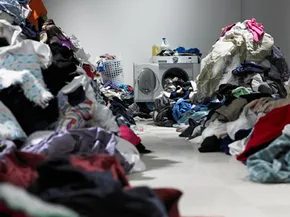
You probably don’t think about it much. You wake up. The alarm screams. You roll out of bed.
But stop and look around. Your morning routine is built on a foundation of invisible labor performed by machines. The toilet flushes. The fridge hums. The phone buzzes.
We take these conveniences for granted. They are so embedded in our daily rhythm that we rarely ask how they got here. Or why we still rely on them so heavily.
Most people would list the refrigerator and the washing machine as indispensable. Maybe the microwave. But the list goes deeper. It includes the clock. The telephone. The toilet. Air conditioning. Even the computer.
These aren’t just gadgets. They are the scaffolding of modern life. They dictate when we wake, how we stay clean, how we preserve our food, and how we talk to each other across time zones.
Their development wasn’t linear. It wasn’t planned by a committee. It was messy. It involved scientists, businessmen, and sometimes just plain luck. Ideas overlapped. Patents warred. Accidents turned into inventions.
Yet today, billions of people rely on these technologies. They are no longer luxuries. They are basic creature comforts.
Let’s look at ten of them. Not just the big ones. The ones you might forget about until they break. We’ll trace the how, when, and why of their existence.
Some of these choices might surprise you.
Life without them? It’s hard to even imagine. But we can try.
1: The Clock
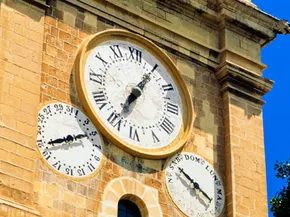
You check the time constantly. Your phone. The microwave. The car dash. It’s everywhere now. But this wasn’t always true.
Early timekeeping was messy. The first clocks were probably just sticks stuck in the ground. You watched the shadow move. It was a sundial. Simple. Limited. Useless at night. Useless when clouds rolled in. Plus, the days change length depending on the season. Your measurements would drift. Accuracy was the real issue.
How Did Standardized Time Measurement Begin?
It took until the second century to fix the seasonal drift. Ptolemy figured out that if you tilt a stick parallel to the Earth’s axis, the shadow moves evenly all year round. That gave us consistent increments.
But what about the dark?
People got creative. Water clocks dripped steadily. Candles burned at a predictable rate (assuming no breeze). Hourglasses were romantic and popular. But none of these were precise enough for serious scheduling.
That changed around the beginning of the 14th century. The mechanical clock arrived. We don’t know who invented it. What we know is how it worked. An oscillating escapement controlled the mechanism. It was stable. Reliable.
Suddenly, appointments mattered. You could plan. Religious observances could be synchronized. Life sped up. We were on the road to three-minute eggs and power lunches.
Before that, though, we had to wake up to the sound of leaking water.
Who Invented the Alarm Clock?
Blame the Greeks. Around 250 B.C., a water clock was modified to whistle when the water reached a certain level. It was the original wake-up call. Annoying, but effective.
Now we can sync our watches. Let’s move to something less relevant to your morning routine but vital to public health: the toilet.
The Birth of Modern Plumbing and Sanitation
Plumbing isn’t new. Mesopotamia had systems around 2,500 B.C. But the Romans made it broad. They built sewers. They placed outhouses strategically over them. Running water. It was genius.
It didn’t stick.
By the Middle Ages, Europeans were still throwing waste out their windows. The chamber pot was king in every home. London’s streets smelled like death. After the cholera epidemic hit hard, sewage disposal became a priority. Not a luxury. A necessity.
This coincided with the rise of the flush toilet. The room was called a water closet. Attempts at indoor disposal date back millennia, but Sir John Harrington made it practical in the 16th century. He designed a bowl with a hole at the bottom. A valve. Water came from a cistern. Gravity did the flushing.
Thomas Twyford mass-produced the modern toilet. He refined the water closet concept. By 1885, the clumsy, unhygienic designs vanished. In came the sleek all-china closet. Clean. Efficient. The precursor to the commode we use today.
The History of Bathroom Tissue
We don’t think about toilet paper until we run out. It’s a basic household item. But in 1880, the British Perforated Paper Company made the first paper specifically for personal hygiene.
Before that? You used what was there.
Leaves. Sand. Sticks. Stones. Shells. If it was nearby and disposable, you used it. Later, some people reused sponges.
When paper became more common in the late 15th century, recycling kicked in. Old letters. Newspapers. Paper bags. They lined the privies and water closets. You didn’t buy tissue. You recycled whatever was on hand.
It’s a long way from a stick in the dirt. And a lot further from throwing waste out the window.
When you reach into the fridge for that midnight pie, pause for a second. Think about the chaos of a world without it. No ice cubes. No fresh milk. You’d be buying eggs in tiny quantities, if you could find them at all. The variety in your grocery store? Gone. Perishable goods spoil too fast to ship across continents. You might be back to growing your own vegetables just to eat.
The credit goes to Carl von Linden. He didn’t just build a box. He perfected a process that turns gas into liquid. This side effect? It sucks heat out of the air. That liquid coolant moves through coils, pulling warmth away from your food and dumping it outside.
The first food-preservation fridge hit the scene in 1911. Then Frigidaire mass-produced a practical model in 1923. Prices dropped. Sales spiked. A small freezer compartment for ice cubes soon followed. The old iceboxes—wooden boxes packed with harvested ice—faded into history. The refrigerator became non-negotiable.
How Modern Fridges Keep Food Safe
It wasn’t always electric. In the early 1900s, Frederic Tudor made millions shipping ice blocks worldwide. He insulated ships and delivered cold to the Caribbean. He was the original Mr. Freeze. But waiting for an ice delivery was unreliable. The electric fridge solved that.
Now, let’s talk about the other beast in the house: the washer.
The Evolution of the Washing Machine
People have cleaned clothes for millennia. Back in Roman times, they beat garments against stone. They used animal fat for soap. It wasn’t glamorous. A few hundred years later, stone troughs gave way to wooden scrub boards. Still backbreaking. Still slow. Results were mediocre at best.
Then came agitators. Paddles suspended in water. You turned them back and forth. It still took muscle. But it worked on the same principle we use today: agitation releases dirt from fibers.
The real shift happened in 1908. Alva J. Fisher introduced the “Thor.” The first electric washing machine. No more hand-cranking.
Why Spin Speed Matters in Laundry
Today’s machines use a two-drum system. The inner drum holds your clothes near the agitator. The outer drum holds the water. When the cycle ends, the inner drum spins. Water drains through hundreds of tiny holes.
That final spin? It’s violent. The drum can hit speeds of 80 mph (130 km/h). That centrifugal force wrings out more water than any human ever could. You save time. You save your back. You save your manicure.
With laundry done, you can finally pick up the phone.
The Telephone: From Wall to Pocket
The phone has changed more in 100 years than most technology does in a century. We went from wall-mounted fixtures connected to switchboards to wireless devices using satellite tech.
Alexander Graham Bell gets the credit. But Antonio Meucci, an Italian immigrant, actually deserves it. Meucci filed a patent for a “talking telegraph” in 1849. He never finished the process. Bell filed his patent in 1876 and won the race.
Cell phones are eating landlines. By late 2007, nearly 16% of U.S. homes relied solely on cell phones. Another 13% used them as their primary device, landline or not. The voice call didn’t die. It just got smaller and more portable.
Why Homeowners Should Care About Appliance Longevity
You might think these are just background items. They’re not. They’re the infrastructure of modern domestic life. And when they break, they break hard.
Consider the dryer. Before the electric dryer, rain was your enemy. Clotheslines worked in the sun. They were useless in the wind or rain. The electric dryer arrived early in the 20th century. It paired with the washer to become the laundry room’s dynamic duo.
Now, look at the internet. We blame the U.S. military. ARPA started it in the 1960s. The goal? Link four computers to survive a nuclear attack. That’s how we got the foundation for today’s web.
But here’s the thing you miss if you’re just scrolling. These appliances aren’t just conveniences. They’re engineering marvels that changed how we live. The fridge gave us food security. The washer gave us time. The phone gave us connection. The internet gave us information.
When your fridge starts making noise, listen. It’s the sound of thermodynamics working against entropy. When your washer shudders, it’s the drum fighting centrifugal force. When your phone drops a call, it’s satellite latency.
We take it for granted until it fails.
Next up: recorded sound.
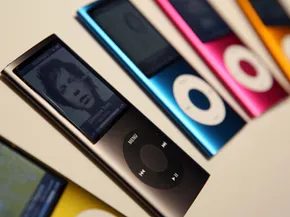
Your MP3 player is a pocket-sized music machine. It holds thousands of songs. You pick what you want by clicking a button. You set your mood with a single tap.
Music hits us deep. We take it everywhere. Imagine a world without recorded sound. No archives. No replay. Just live performances that vanish the moment the final note fades.
Sound recording existed in primitive forms as early as 1500 B.C. But real progress didn’t start until 1877. That’s when Thomas Edison unveiled the phonograph. He didn’t invent the concept alone. He built on French inventor Leon Scott’s earlier work. Scott’s machine could record sound. It couldn’t play it back.
Edison fixed that gap. He used a stylus and a foil-wrapped cylinder. The stylus captured sound waves. The cylinder played them back. It worked.
Other inventors tried to improve the design. Alexander Graham Bell patented his own version in 1885. He focused heavily on sound quality. The technology evolved fast.
Today, your digital player uses hard drives and compressed files. MP3 software analyzes sound against human hearing limits. It looks for repeated sounds and overlapping pitches. It compresses the data efficiently. Digital recording uses binary code. Complex methods. But it all traces back to Edison’s scratchy voice reading “Mary Had a Little Lamb” onto tin foil.
Want visuals with your audio? Look at the next section. We’ll cover the television.
Vinyl vs. Digital Sound Quality
Old vinyl records still have an edge over digital media. Vinyl is analog. It copies the original sound wave directly. Digital media takes snapshots. It stitches them together.
Gaps exist between those digital signals. Some sound gets lost in those tiny spaces. If a drum solo feels thin in your digital file, you’re probably right. The nuance slipped through the cracks.
7: Television
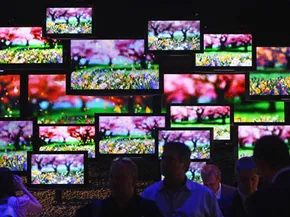
Before the screen in your living room flickered to life, people gathered around radios for news and entertainment. Before that, it was newspapers and neighbors. Television changed the game. The concept started with photoconductivity and visual persistence in the late 1800s. It took 90 years to get from that theory to the live broadcast of the first moon walk in 1969.
The post-WWII era changed everything. The surrender of the Japanese in 1945 was one of the first major events broadcast on TV. It brought immediacy to current events. NBC, which started in 1939, grew rapidly. What was once an oddity in public bars became a central part of American life. Today, there are over 1.5 billion TV sets globally.
How Home Cooling Began
Summer heat was once a challenge. People relied on light breezes in shotgun-style homes, large trees for shade, or cold drinks. Then came Willis Carrier.
In 1902, Carrier built his first unit to cool a printing plant and remove humidity from the printing process. He patented the design in 1906 and sold units for commercial use. By 1928, he released the Weathermaker, the first home air conditioner.
Retailers noticed something important quickly. Department stores found that cool air improved business. Movie theaters also benefited. Air conditioning made local cinemas a prime spot on hot days.
The Rise of the Microwave Oven
Meals in minutes became reality in 1967 with the domestic microwave. A typical microwave cooks meat six times faster than a conventional oven. This saves significant kitchen time.
The technology wasn’t designed for cooking initially. It came from World War II radar research. Dr. Percy LeBaron Spencer at Raytheon discovered the heating effect accidentally. He noticed a candy bar melted in his pocket from radio waves.
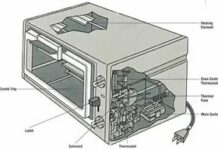
Microwaves use a magnetron tube to generate high-energy, short radio waves. These waves agitate water molecules in food. This process cooks food faster and more evenly.
Raytheon’s Amana division launched the first commercial unit in 1954. The ®Radarange, their first domestic model, arrived in 1967. Now, an estimated 90% of American homes have one.
The First Microwave Ovens
Early models were not like the countertop appliances we use today. The first Raytheon commercial units from 1947 weighed 750 pounds (340.91 kg). They were industrial beasts, not kitchen staples.
We are now moving toward the next major invention that permeated our lives. The computer.

Charles Babbage gets the credit for the computer. Specifically, his 1840 “Analytical Engine” design. But he wasn’t working in a vacuum. Many hands built the modern machine.
The first non-mechanical computers were military number crunchers. The Navy used the MARK 1 during World War II. It was massive. Fifty-five feet long. Eight feet high. It relied on vacuum tubes. The machines were huge. They ran hot. They cost a fortune to operate.
Miniaturization came slowly. Transistors helped. Integrated circuits followed. But the real shift happened with the microprocessor. That’s when computers stopped being industrial equipment and started becoming consumer products.
The Rise of Personal Computing
The market changed in 1977. The Apple II launched. It brought computing to the public. The IBM PC arrived a few years later. Competition drove innovation. These devices made technology accessible.
Refinements followed quickly. The graphical user interface (GUI) arrived. Operating systems became intuitive. Users didn’t need to memorize command codes anymore. They clicked. They pointed. They understood.
In just thirty years, the impact was total. Business workflows changed. Entertainment shifted. Global communication accelerated. It’s difficult to find a slice of human life that the computer didn’t touch.
“It’s hard to envision a single aspect of human life that hasn’t been impacted by the development of computer technology.”
Why Refrigerators Changed Diets
We often compare the computer to the refrigerator. Both are household staples now. But their origins differ. The refrigerator changed how people eat. It allowed for longer food preservation. Waste dropped. Diets became more varied. Perishable foods could be stored safely.
Computing and Workplace Productivity
The widespread use of computers has significantly increased workplace productivity. Automation handles repetitive tasks. Data management improves. Communication enhances. The result is a faster, more efficient work environment.