Pushing a heavy bookcase across a room does more than just strain your back. It puts lateral stress on the furniture’s legs. Over time, that weight and friction wear down the wood. Old pieces suffer the most. Structural breaks need fixing. Ignore them, and the damage spreads.
How to Tighten Loose Caster Sleeves
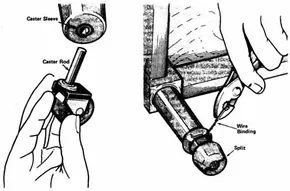
Casters are held in place by a metal rod driven into the leg’s bottom. Move the cabinet too many times, and that rod shakes the wood loose. The hole gets bigger. The caster wobbles. If you pull hard enough, the wheel falls out. Or worse, the leg splits.
Start with the simplest fix. You need caster sleeve inserts. These come in plastic or metal. They fit inside the enlarged hole.
- Remove the loose caster.
- Tap the insert into the wood hole.
- Insert the caster back into the sleeve.
No glue required. The sleeve should fit snugly. If it’s loose, grab a larger size. Repeat until the wheel stays put.
Repairing a Split Leg with Steel Wire
If the wood has cracked, the sleeve won’t help alone. You need to bind the break.
Remove all casters from the piece. This ensures consistency. Apply wood glue into the split. Press the edges together tight. Wipe away the squeeze-out.
Now, reinforce it. Use fine black steel wire. Wrap it tightly around the leg at the point of the break. If there’s a ridge or carving there, tuck the wire in. It will hide. If the leg is plain, use a triangular file to carve a small notch. Wrap the wire in that groove. Do this for every leg. Uniformity matters.
“If the leg doesn’t have any carving or decoration at this point, you can notch the wood all the way around with a triangular file, and then wrap the wire in the notch.”
Fixing a Short Leg Without Cutting the Others
One leg shorter than the rest? Don’t cut the others down. That ruins the design. It shortens the piece. And it rarely matches up.
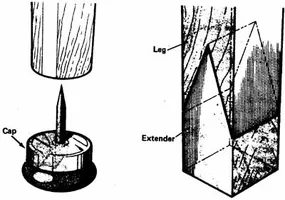
Build up the short leg instead. Use a metal leg cap. These come in various sizes. They have prongs on a metal base.
Center the cap on the short leg. Lightly tap it to mark where the prongs hit. Drill tiny pilot holes. This prevents splitting. Hammer the prongs in. The leg is now level.
Tools needed:
– Caster sleeve inserts
– Wood glue
– Fine black steel wire
– Triangular file (if leg is plain)
– Metal leg caps
– Drill and tiny bits
– Hammer
Safety first. Wear eye protection when filing or drilling. Sharp edges on wire can cut skin. Handle with care.
Fixing Wobbly Legs with Wood Extenders
A metal cap is the quick fix. But sometimes it just doesn’t work. The leg is too short. The gap is too wide. In those cases, you need a wood extender.
Cut the new piece from the same wood as the furniture. Ideally. You want it to match. Shape it to fit the original leg exactly. Then glue it. Nail it down. Countersink those nails so they sit below the surface. You’ll likely have to refinish the entire piece afterward. Blend the new wood with the old. It’s the only way to hide the repair.
A-Notch Bracing for Wide Gaps
If the gap is really wide, skip the simple patch. Try a V-notch. Cut a V-shape into the bottom of the leg. Cut a matching V into the extender. Glue them together. You’ll form an A-shaped brace.
This isn’t just a fix. It’s a structural reinforcement. The joint is incredibly strong. It also gives the piece a handmade look. Which is nice. You don’t have to match the wood perfectly if the style is rustic or intentional.
Use wood glue. Add small nails. Drive them where they won’t show. Fill the holes with wood filler. Sand it smooth. Even if you can see the nail heads later, it won’t look bad. It looks like character.
What About Doors?
Wooden doors are another story. They warp. They stick. They sag. But that’s a different problem.
We’ll cover door repairs next. Because fixing a leg is only half the battle.