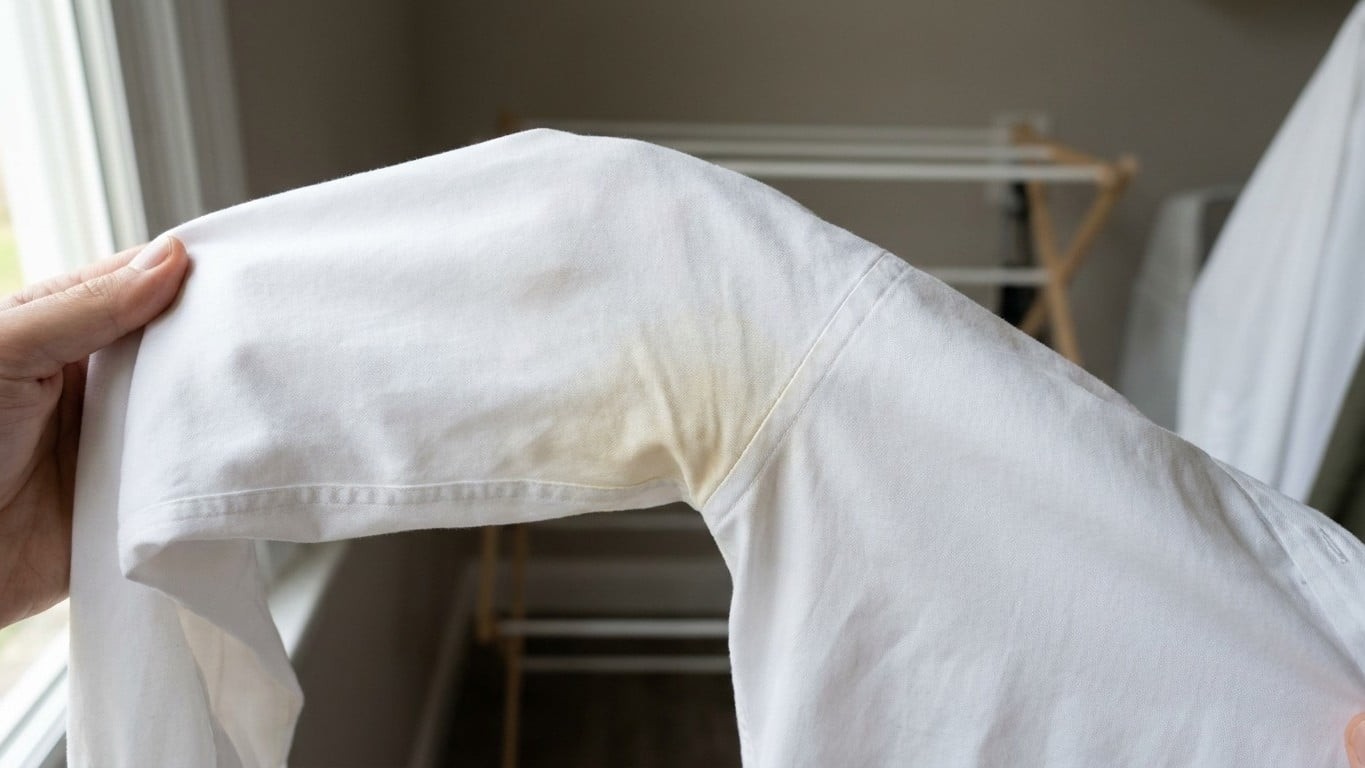
Every summer, the ritual repeats. You pull on a white shirt, only to find that dreaded yellow ring under the arms. Your instinct? Reach for the bleach. It’s the default move for stubborn stains. It’s wrong. Using bleach on deodorant marks doesn’t remove the stain. It makes it permanent. The culprit isn’t dirt. It’s a chemical reaction you’ve likely been fighting for decades.
The Real Culprit: Aluminum, Not Sweat
Here is a fact that surprises most people. Sweat is colorless. Your sweat is clear. It’s transparent. The yellowing comes from elsewhere. Specifically, it comes from your deodorant.
Most antiperspirants contain aluminum salts. These salts work by blocking sweat glands to reduce moisture. When they come into contact with proteins in your sweat, they form a residue. This residue is yellow. It sticks to fabric fibers. It doesn’t wash away easily.
Aluminum salts react with sweat proteins to create a yellow compound that bonds to textile fibers.
Why Bleach Backfires
When you see a yellow stain, chlorine bleach seems like the logical solution. It’s harsh. It’s strong. It kills bacteria. But on a white shirt stained by antiperspirant, bleach does the exact opposite of what you want.
The active ingredient in bleach is sodium hypochlorite. When it hits the aluminum-protein mixture stuck to your cotton, it doesn’t lift the stain. It fixes it. The chlorine reacts with the proteins and the aluminum. This creates a tightly cross-linked compound. A light yellow tint turns into a deep, dark yellow. It becomes nearly indelible.
This isn’t a new discovery. Textile chemists have known about this reaction for decades. The American Cleaning Institute advises against using chlorine bleach on garments stained by antiperspirants. Beyond the discoloration, bleach weakens the fabric. It breaks down fibers. Your t-shirt loses its strength and may develop holes faster, especially in the armpit area where the chemical damage is most concentrated.
What Actually Works on Stains
Stop trying to bleach the aluminum out. You need to break the chemical bond between the aluminum and the protein. A simple paste works well for set-in stains.
Mix equal parts of hydrogen peroxide, baking soda, and warm water. Apply this paste directly to the yellowed area. Let it sit for 30 to 60 minutes. Then, wash the garment as usual. For older, more entrenched stains, try an overnight soak in an oxygen-based stain remover. Check the care label first, of course. But this method targets the chemistry directly rather than blasting it with harsh chemicals.
Prevention Strategies
Prevention is easier than removal. A simple change in routine can stop the yellowing before it starts. Wait until your underarms are completely dry before applying deodorant. If you apply product to damp skin, you mix it with residual moisture. This accelerates the chemical reaction that leads to stains.
The most effective solution? Switch products. Look for deodorants without aluminum salts. Natural formulas often avoid these specific salts. They don’t block sweat glands, but they also don’t create the yellowing reaction.
The Format Matters
Not all deodorants cause stains equally. The application format plays a huge role. Stick antiperspirants deposit the thickest layer of product on your skin. They often contain waxy bases like stearic alcohol or hydrogenated coconut oil. This base carries the aluminum salts and leaves a thick residue on the skin. That residue transfers mechanically to your shirt fabric when you move.
Spray deodorants are less problematic. The particles are finer. They dry quickly. They reduce the amount of product that mechanically transfers to your clothing. It’s a small detail most people ignore when shopping at the supermarket, but it might save your white shirts.
Sources: pour-homme.fr | planetezerodechet.fr