There is a war happening in kitchens across the world.
It involves plates. It involves soap. And it involves you, standing at the sink, wondering if you should rinse your dinner plate before loading it.
The internet is full of opinions. Half say yes. Half say no.
We asked the professionals.
The answer? No.
Why You Should Never Pre-Rinse Dishes Again
Modern dishwashers are not lazy. They are engineered machines.
Dennis Godynuk, a dishwasher expert, says these appliances are built to handle dirt. Not just a little dust. Actual food.
“Dishwashing detergents often need bits ofFood particles to cling to and break down later.”
Think about it. Detergent enzymes eat grease. They need something to eat. If you rinse the plate clean, you starve the detergent.
Professional cleaner Kathy Cohoon backs this up. Manufacturers literally state that pre-rinsing is unnecessary.
In fact, rinsing might hurt the performance.
Many new models have sensors. These sensors detect how dirty the water is. If the water is already clean because you rinsed everything, the machine thinks the load is light.
It runs a shorter cycle.
You get a shorter wash.
Your dishes come out less clean.
Scrape the big stuff. Bones. Toothpicks. Thick grease. That is the only prep work needed.
How to Fix a Dishwasher That Isn’t Cleaning Well
If your plates still come out grimy, don’t start rinsing them.
The machine is broken. Or you are using it wrong.
Here is how to troubleshoot without calling a repairman.
Check Your Dishwasher’s Age
Most modern units hate rinsing.
Older ones? Different story.
Cohoon notes that for machines 10 to 15 years old, a light soak might help. The technology hasn’t caught up back there. But for most homes? Scrape and load is still the rule.
Pre-Heat Your Water
Cold water makes grease hard.
Godynuk has a simple trick. Run your kitchen sink faucet until the water is hot. Then start the dishwasher.
This ensures the first water entering the machine is warm.
It helps unstick stubborn sauce.
It kicks the cycle into high gear faster.
Unclog the Spray Arms
Look inside. Do those arms spin?
Spin them with your hand.
If they don’t move, they are clogged.
Use a wooden toothpick to clear the holes. Don’t use a metal pin. It can damage the plastic.
If they are still stuck, remove the arms. Clean them under the tap. Snap them back on.
Clean the Filter Monthly
Everyone forgets the bottom filter.
It catches the pizza crusts. It gets gunked up.
Pull it out. Wash it with dish soap and a brush.
Do this once a month.
If you have hard water, run a cycle with citric acid or a dishwasher cleaner. Empty tank.
Also, check your drain hose.
Godynuk warns it needs a high loop. If it’s flat, dirty water flows back into the tub. That is gross. And ineffective.
Remove Stubborn Stains
Sometimes the machine loses.
Red wine stains. Coffee rings.
If they survive the cycle, treat them manually.
Soak glasses in warm water with white vinegar.
For coffee rings, make a paste of baking soda and water. Rub it in. Rinse.
Do not put stained glasses back in the dishwasher hoping for a miracle. They won’t clear up.
3 Simple Ways to Get Sparkling Clean Dishes
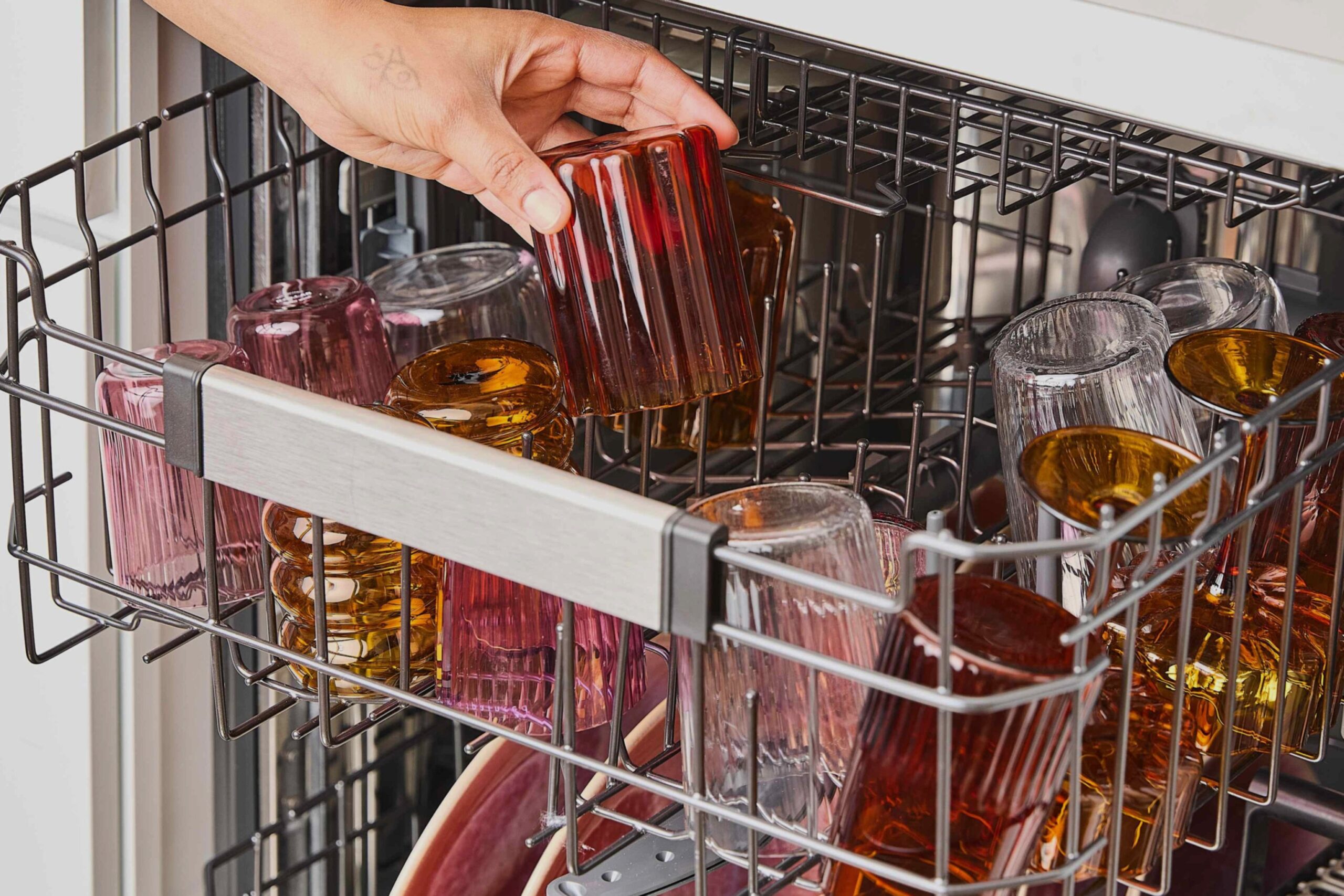
Loading matters.
Settings matter.
Rinse aid matters.
Load With Space
Squashing dishes together blocks water.
Plates face the center spray.
Bowls tilt down so water drains.
Utensils?
Do not let forks nest in spoons.
The water can’t reach the tines if they are locked together.
Spread them out.
Give the water room to work.
Choose the Right Cycle
Always using “Normal”?
You are wasting electricity and getting poor results.
Use “Auto” or “Heavy” for baked-on lasagna sauce.
Use “Quick” only for lightly soiled cups.
If your glassware looks cloudy, you might be using heat that is too high.
Godynuk explains this etching is caused by heat and strong chemistry.
Switch to gentler cycles. Use less detergent.
The cloudiness might not come back. But if it does, that glass is permanently etched. You can’t un-etch glass.
Use Rinse Aid
Don’t skip the rinse aid tank.
Keep it full.
It helps water sheet off dishes. No spots. No streaks.
If you still get white film, add a dishwasher booster.
But avoid the strongly perfumed ones.
They smell like chemical flowers.
You want clean dishes. Not a spa day.
So, next time you finish dinner.
Scrape the plate.
Load it.
Press start.
Stop rinsing.
Let the machine do the job it was paid to do.
Or does that make you uneasy?
Maybe the silence of the pre-rinsing sink was your peace.
Now you have to listen to the scrape.
And the clatter.
And the hum of a machine actually working.
Is it worth the extra clean?
Probably.