Your electric furnace isn’t heating. The air coming out feels lukewarm, or worse, it’s just blowing ambient room temperature air. It’s frustrating, especially when the thermostat is set to “heat” and the fan is running. Before you call out a pro who might charge a visit fee just to look at it, there are a few things you can check. Electric systems are simpler than gas furnaces because they don’t have burners, pilot lights, or complex gas valves to worry about. The main components are the heating elements and the blower. If one of those fails, you lose heat. But sometimes, the fix is as simple as a dirty filter or a tripped breaker.
Check the Thermostat First
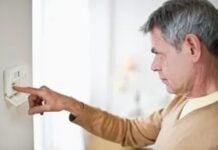
Start with the obvious. Is the thermostat actually calling for heat? If it’s battery-operated, swap them out. Weak batteries can cause erratic behavior. Set the mode to “Heat” and the temperature 5 degrees higher than the current room temperature. Listen for a click. If you don’t hear it, the thermostat might be dead or miswired. Replace it. If you hear the click but the furnace doesn’t respond, the issue is downstream.
Inspect the Air Filter
A clogged air filter restricts airflow. This doesn’t just make the house cold. It causes the furnace to overheat. Most electric furnaces have a high-limit switch that shuts off the heating elements if the temperature gets too high inside the unit. This prevents a fire. If the filter is dirty, the heat builds up faster than it can be blown out. The high-limit switch trips. The heating elements stop. The blower keeps running. You get cold air.
Pull the filter. Hold it up to the light. If you can’t see light through it, replace it. Use a new one of the correct size and MERV rating. Don’t go too high on MERV unless your system is designed for it. High-efficiency filters can restrict airflow too much. Standard pleated filters (MERV 8-11) are usually fine. Install it with the arrows pointing toward the blower motor.
Verify Power Supply
Electric furnaces draw a lot of power. They need a dedicated circuit breaker, usually 30 amps or more, depending on the unit size. Check your main electrical panel. Is the breaker for the furnace tripped? Flip it off, then back on. If it trips again immediately, there’s a short circuit. Do not keep resetting it. You’ll need an electrician. If the breaker is on and stays on, power is reaching the unit. Move on.
Also, check the disconnect switch near the furnace. It looks like a light switch on a metal box attached to the unit. Make sure it’s in the “on” position. Sometimes it gets bumped during other work.
Examine the Heating Elements
This is where the heat is generated. Electric furnaces use resistive heating elements, similar to the coils on an electric stove. They are housed in the plenum of the unit. To access them, you must turn off power to the furnace at the breaker and the disconnect switch. Turn off the power. Always.
Remove the access panel. You’ll see cylindrical metal tubes with wires connected to them. These are the heating elements. Vis