The buzzing starts at dusk. You’re trying to enjoy the patio, but the gnats are swarming. It’s maddening. You run to the garage and grab that plug-in bug zapper from the back of the closet. You set it up. You wait for the zap.
It sounds like a solution. It looks like a solution. But it’s not.
At least, not for the bugs you actually care about.
The UV Light Trap
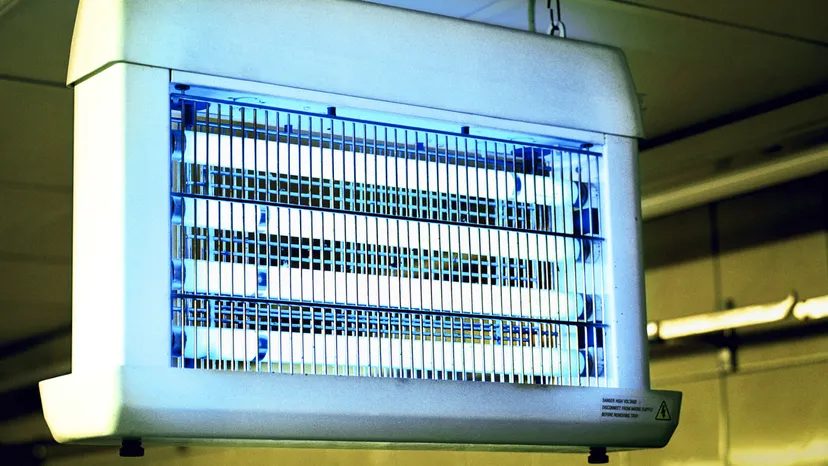
Standard bug zappers, technically known as electrical-discharge insect-control systems, work on a simple premise. They use ultraviolet light, neon, or mercury vapor lamps to attract flying insects. A transformer boosts standard 12-volt current to over 2,000 volts across a metal mesh grid. The gaps are sized for insects. When a bug flies through, it completes the circuit. Zap. Dead.
These devices are efficient at killing things. One unit can eliminate over 10,000 bugs in a single evening. That sounds impressive.
But it’s also ecologically expensive. And it’s mostly useless against mosquitoes.
The Science of the Miss
Here is the hard truth most hardware stores won’t tell you. Mosquitoes are not attracted to UV light. They hunt by detecting carbon dioxide, body heat, and specific chemical scents like octenol.
A study by Timothy Frick and Douglas Tallamy at the University of Delaware proved this. They analyzed 14,000 insects killed by six different bug zappers in Newark, Delaware. The results were stark. Only 31 of those insects were biting gnats or mosquitoes.
That is less than one-quarter of one percent.
So, you’re standing on your porch listening to the buzz of a zapper that is primarily killing harmless moths, beetles, and other beneficial insects. You’re losing the good bugs. The mosquitoes? They’re still biting you.
“Mosquitoes are not attracted to ultraviolet light in the way that many other insects are.”
How to Actually Stop the Bites
If your goal is to stop mosquitoes, you need to stop relying on light. You need to rely on chemistry.
1. Choose Mosquito-Specific Zappers
Some electronic traps mimic human physiology. These devices emit octenol and carbon dioxide. Since CO2 is what we exhale and octenol is found in sweat, these traps lure mosquitoes directly to the trap where they are electrocuted. This is the only way a zapper-style approach actually works for biting flies.
2. Pesticides and Repellents
For immediate relief, chemical barriers work best. This ranges from skin sprays with DEET or picaridin to treating your yard with pesticides. If you want a passive approach, citronella candles and torches can help mask your scent and confuse the insects. It’s a deterrent, not a killer, but it creates a buffer zone around your table.
3. Understand the Ecosystem
The sheer volume of non-biting insects killed by standard UV zappers takes a toll. You’re removing pollinators and food sources for bats and birds. It’s a blunt instrument for a specific problem.
The Bottom Line
You don’t need more light. You need a smarter trap.
If you plug in a standard bug zapper tonight, you’ll hear a satisfying crackle. But look closer at the tray. It’s full of moths. The mosquito will still be on your arm.
Switch to a trap that smells like you. Or just keep the citronella lit. Your skin will thank you.