The numbers don’t lie. In 2005, the US housing market was a frenzy. Over two million new homes broke ground. By 2009, that number collapsed to half a million. The boom years didn’t just drive up prices; they broke the construction process. Developers wanted instant profits. Mortgage lenders offered loose terms. Builders churned out prefab McMansions on a conveyor belt.
Speed was the only metric that mattered.
A Seattle developer bragged about finishing a house in 54 days. To hit that deadline, corners were cut. Deeply. Contractors couldn’t find skilled labor, so they hired untrained crews for critical tasks. Pouring foundations. Hanging windows. Shingling roofs. These jobs were handed to people who hadn’t learned the trade. Materials were swapped for cheaper, unstable substitutes because quality options were in short supply.
Inspectors were overwhelmed. They relied on spot checks. They missed the flaws.
Experts estimate that 17 percent of those two million homes built in 2005 have at least two significant defects. Cracked foundations. Leaky roofs. Structural failures. You might assume newer homes are safer. They aren’t. When work goes too fast, everything goes wrong.
The High Price of a Fast Roof Job
Roofs are not just piles of shingles. They are complex systems designed to keep water out. Leaky roofs are the signature wound of rushed construction, according to the Homeowners Against Defective Dwellings (HADD). Nancy Seats, the group’s president, sees this pattern everywhere.
A watertight roof requires specific geometry. The pitch must be steep enough to direct water at least six inches away from the house. Fast-tracked designs often ignore this. They prioritize eye-catching angles over drainage. Water pools. It seeps in.
Then there is the underlayment. Skimping here is fatal. Professional roofers install metal flashing at every vulnerable point. Flashing is flat or corrugated metal. It covers seams. It sits in valleys where roof slopes meet. It wraps around chimneys and vents.
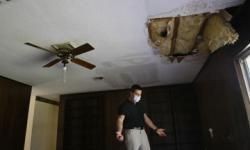
Rushed contractors skip it. Shingles hide the bare wood anyway. They also skip the felt backing. That protective layer goes under the shingles. Without it, water slips through seams. It hits the attic. It causes rot. It breeds mold.
The roof is only as good as its weakest seal. And when you’re racing against a clock, seals are the first thing to go.
Windows: The Next Weak Point
While we’re talking about leaks, let’s look at another symptom of rushed construction: defective windows.
The Window Gap You’re Missing
Bad window job. You get leaks. Fogged panes that never clear. Drafts that kill your heating bill. And windows that simply refuse to slide. It’s not just bad luck. It’s a cascade of shortcuts.
Roofing is hard. Windows are harder. They need layers. Specific skills. And patience. During the boom, contractors were stretched thin. Good materials vanished. So they cut corners.
Proper installation demands more than slapping glass into a hole. Look at the sides and top. That’s the head. You need rubberized flashing there. Think of it as heavy-duty, weatherproof tape. Install the sides first. Then the top. This creates a dam. Water running down the wall hits the flashing and slides off, away from the frame.
Now, look at the bottom. It feels wrong. It’s not sealed tight. That’s the point. Gravity pulls water down. If you seal the bottom, water gets trapped. It rots the wood. Leaving it relatively open lets gravity do its job. Water collects, then drains out. Simple physics. Ignored by rush-job crews.
Homeowners Against Defective Dwellings (HADD) sees the fallout daily. Windows installed without flashing. Without foam insulation to stop drafts. Moisture sneaks in. Wood swells. Walls bulge. Cracks appear. Mold spreads. It’s a slow-motion disaster inside your walls.
And then there’s the basement.
Basement Flooding: It’s Not Just Rain
Nothing beats the sight of a finished basement turning into a swamp. Murky brown water. Carpets ruined. Furniture floating. It’s nauseating.
Construction engineers call it “moisture intrusion.” It’s the number one complaint in new builds. Sure, tornadoes happen. Rivers swell. Sometimes you can’t stop nature. But often? It’s the contractor. Not God.
Here’s the hard truth: There is no such thing as a waterproof foundation. Concrete cracks. Joints fail. If water builds up around the walls, hydrostatic pressure pushes it through. Every crack. Every fissure. It’s inevitable if you don’t manage the water.
A dry basement starts before the first brick is laid. It starts with grading. Soil must slope away from the house. If the contractor was rushing, they might have just dumped the dirt. Now water flows toward your foundation. Pooling. Waiting for an opening.
Gutters matter. Downspouts matter. They must carry roof runoff far from the base of the home. If rain falls off the roof and hits the ground next to the foundation, you’re inviting disaster. Rushed jobs skip downspouts. Or cut them short. The result? Costly damage that could have been prevented with a twenty-minute adjustment.
Dig below the surface. You need a cushion of free-draining backfill. Gravel. Thick layers of it. Why? Because water needs a path. If water flows freely, it drains straight down. It doesn’t seep horizontally into your walls. The gravel acts as a conduit, guiding groundwater toward a subterranean drainage system.
That system is a perforated drainpipe. It sits at the base of the foundation. Water enters from the top. The pipe whisks it away. To sewers. Or a sump pump. Skip the gravel? Skip the pipe? You get flooding. Even if you live in a desert. Even if it hasn’t rained in years. The groundwater is still there. Waiting.
Cracked Foundations
And that brings us to the foundation itself.
The Blue Oaks subdivision outside Sacramento, California, was sold as a retiree’s paradise. It delivered on the aesthetic promise: 250 freshly stuccoed ranch homes circling a private, manicured 18-hole golf course. It did not deliver on structural integrity. As reported by the Wall Street Journal in 2009, the dream curdled into a nightmare for more than half the residents. Their homes literally began cracking apart.
The root cause was a failure to properly test the soil before pouring foundations. The ground consisted of heavy clay that expands during rainy winters and contracts under scorching summer sun. This constant shifting wrenched the foundation walls until they fractured. Those cracks spread through drywall and tile floors, creating a telltale “popping” sound as residents tried to sleep.
How Fast Construction Compromises Structural Integrity
Nancy Seats of HADD confirms that rushed builds frequently result in compromised foundations. Builders often skip essential soil testing. When they do pour, they may skimp on rebar reinforcements that hold concrete walls together. In other cases, builders fail to sufficiently tamp down the fill soil beneath the footers. An improperly compacted base means the house will continue to “settle” long after the keys are handed over.
The Hidden Danger of Mold in New Builds
Let’s move to one of the nastiest consequences of speed: mold. Mold is natural outdoors, decomposing organic matter and returning nutrients to the soil. It is not natural inside your crawlspace. Certain strains, specifically stachybotrys chartarum (black mold) and the aspergillus family, produce mycotoxins that cause serious health issues if ingested. Even common mold allergies can trigger hay fever-like symptoms, dizziness, and skin rashes.
During construction booms, materials were scarce and timelines tight. Builders sometimes installed damp plywood, sealing it behind drywall before it could dry. Unlike hardwoods such as cedar or oak, plywood and processed materials are packed with natural sugars. Mold loves this food source.
Moisture is the enemy. If pipes lack proper insulation, condensation forms and collects between walls. An attic with poor ventilation allows even minor leaks to spawn mold colonies. Unsealed HVAC ducts act as highways, carrying spores throughout the home and exposing residents to allergens.
Preventing Mold and Structural Failures
Homeowners must understand how to identify and prevent these issues. Proper soil testing before construction is critical. Ensuring adequate compaction of fill soil helps prevent uneven settling. Using moisture-resistant materials in high-humidity areas like basements and crawlspaces can reduce mold risk.
Regular inspections of attics, basements, and crawlspaces for signs of moisture or mold growth are essential. Addressing water leaks promptly is key. Maintaining proper insulation and ventilation in attics and crawlspaces helps control humidity levels.
“If pipes aren’t properly insulated, they can produce condensation, which collects between walls.”
For those interested in construction planning and building materials, further resources are available through industry associations and online guides. Understanding these factors can help homeowners make informed decisions and avoid costly repairs.