Using a roller is forgiving. It demands less precision than a brush. A beginner can grasp the rhythm in minutes. But getting a smooth finish requires technique. Not just brute force.
Preparation starts before you touch the wall. For latex paint, wet the roller sleeve with water. Use the correct thinner for oil-based options. Roll out the excess on scrap wood or kraft paper. Paper grocery bags work too. Avoid newspaper. The ink will transfer to your roller and ruin the job.
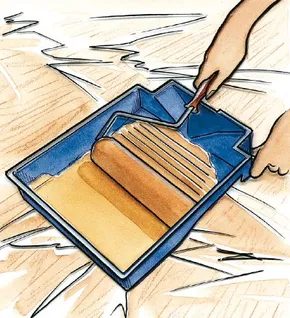
Fill the roller tray halfway. Set the roller in the center. Roll it down the ramp of the pan. Stop before it hits the bottom. Repeat this two or three times. This forces paint into the fibers. Dip again. Roll until the pile is fully saturated.
Watch for the drip. If paint runs off the roller before it hits the wall, you have too much. The roller will slide. It will smear. It won’t roll. You need to remove excess.
The Zigzag Technique
The most effective way to apply paint is in small sections. Work on 2-to-3-square-foot areas. This prevents the paint from drying too fast and leaving lap marks.
Roll on a zigzag pattern. Do not lift the roller. Make a large M, W, or backward N. Fill the gaps with more horizontal or vertical strokes. Keep the roller moving.
Finish with light strokes. Start in the unpainted area. Roll into the wet paint. Raise the roller slowly at the end. This prevents a heavy mark or line.
Move to the next section. Repeat the zigzag. End just below or beside the previous patch. Smooth the new application. Blend it into the area you just finished. The goal is a uniform coat. No visible overlap. No drips.
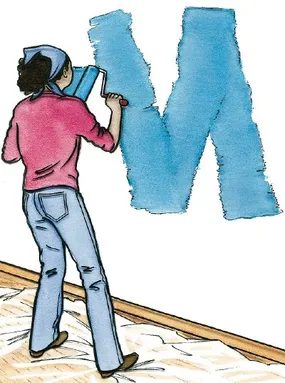

Start with the roller moving away from your body. On vertical surfaces, that means the very first stroke goes up. If you pull down first, gravity wins. The paint collects under the roller casing. It runs down the wall in ugly drips. You end up fixing mistakes before you really started.
Speed matters too. Don’t race across the surface. Move the roller rapidly and centrifugal force takes over. Paint flies off the nap. It sprays onto your clothes, the ceiling, and the floor. Control the motion. Steady pressure. Consistent speed.
This isn’t just about aesthetics. It’s about efficiency. Wiping up splatter takes time. Touching up drips adds hours to the job. Start correctly and the rest flows easier.
Common Painting Mistakes to Avoid
Many homeowners rush through the initial coat. They think more paint equals better coverage. It doesn’t. It equals runs. It equals uneven texture.
- Pulling down first causes puddling.
- Rolling too fast creates overspray.
- Inconsistent pressure leaves lap marks.
Keep the roller loaded but not dripping. Test on cardboard first if needed. Feel the weight. Find the rhythm.
Tools and Technique
A quality roller cover helps. Look for a medium nap for standard walls. Smooth walls get a light nap. Textured walls need more depth.
Angled brushes? Use them for edges. Rollers for the main fields. Cut in first. Then fill in. Or roll up from the bottom. Either way, keep the paint moving.
Safety first. Drop cloths. Tape. Gloves. But also your posture. Stand comfortably. Bend at the knees, not the back. Painting is physical. Treat it like work.
When to Stop and Check
Pause between sections. Look back. See where the wet edges meet. Blend them out immediately. Don’t let paint dry on the roller. Wash it or get a new cover.
If you see streaks, go back. Lightly re-roll. Don’t press hard. Just smooth it out.
The Result
Clean lines. No drips. No splatter. Just a uniform coat. It takes less time in the long run. You avoid the cleanup. You avoid the second coat.
Does the extra caution matter? Yes. Because once the paint dries, you can’t undo it. Not without sanding and starting over. That’s the real cost. Time. Money. Frustration.
Keep it simple. Roll up. Move steady. Check your work.