


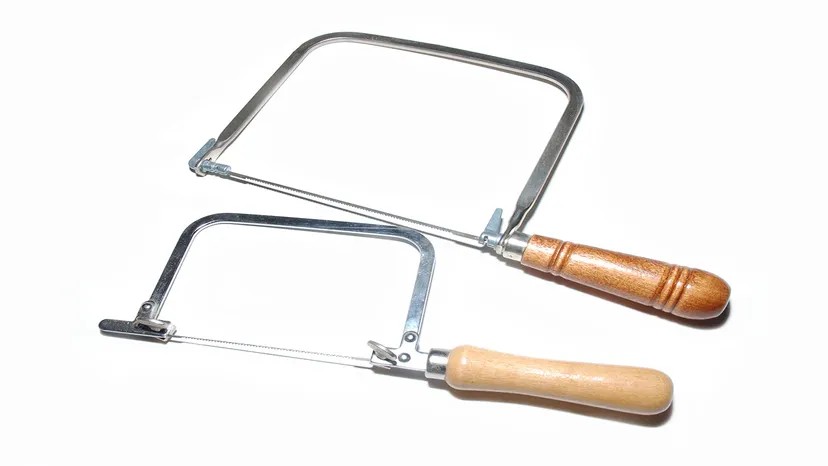
You need a tool that turns. Not just the workpiece. The blade itself. Enter the coping saw. It looks like a hacksaw’s skinny, awkward cousin. A U-shaped frame. A thin, tensioned blade. And a handle that lets you twist your wrist while you cut.
It’s named after the carpentry trick called coping. You know the move. Two pieces of trim meet inside a corner. You can’t just butt them together. You have to carve one piece to match the profile of the other. Flush. Tight. No gaps. That’s the cope. And this saw is built specifically to make those tight, curved joints without splintering the wood or leaving a jagged mess.
What Is a Coping Saw and Why Do You Need One?
Forget the big circular saws for a second. They’re loud, messy, and terrible at curves. The coping saw fills the gap between rough cuts and laser precision. It’s a hand saw. Manual. Quiet.
The frame is metal. The blade is thin steel or tungsten carbide. The distance between the blade and the frame—called the throat—is usually 4 to 6 inches. This gap matters. It lets you reach deeper into a cut. The handle? Hardwood or plastic. Some have a twist mechanism to tighten the blade. Tighten it too much, and it snaps. Too loose, and it bends. You want tension. Not stress.
Blades come in two standard lengths: 6 3/8 inches or 6 1/2 inches. Teeth per inch (TPI) varies. Most sit around 12 to 15 TPI. Coarser blades chew through soft pine. Finer blades slice through hardwood or thin metal without skipping.
Christopher Morrow patented the tensioned version in 1887. By 1900, it was in every catalog. It hasn’t changed much because it works.
How to Install and Use a Coping Saw Safely
Here is the reality. If you install the blade wrong, it will fly off. Or worse, bind in the wood and snap.
- Mount the frame. Lay the front of the U-frame on a bench. Hold the handle up.
- Attach the top. Hook one end of the blade into the spigot farthest from the handle.
- Compress and hook. Push down on the handle. The frame compresses. Hook the bottom end of the blade into the lower spigot.
- Release and twist. Let go. Twist the handle if your saw has an adjuster. The blade should hum when plucked. Not rattle. Not scream.
Safety first. Keep hands away from the teeth. Wear safety glasses. Long hair tied back. Gloves help, but don’t let them get caught in the mechanism.
Clamp your work. Do not hold it with one hand and saw with the other. You need stability. Draw your line with a pencil. Place the center teeth on the line. Push away from you. Short strokes. Let the teeth do the work. Do not force it. If you’re cutting into the middle of a board, drill a pilot hole first. Remove the blade. Thread it through. Reattach. It’s annoying. But it saves the blade.
Which Blades Should You Buy for Different Materials?
The blade is the consumable. The frame is the tool. You will break blades. You will dull them. Replace them.
- Wood Cutting Blade: The standard. Steel. 15 to 18 TPI. Less teeth means faster cuts but rougher edges. More teeth means slower cuts but cleaner lines. Use 15 TPI for most trim work.
- Plastic Cutting Blade: These have helical teeth. They spiral like a drill bit. Why? Plastic melts or cracks under pressure. The helical design pulls the material apart gently. Use minimal force. If you push hard, you ruin the plastic.
Dull blades are dangerous. They slip. They require more force, which leads to mistakes. Check your blade before every session. If it looks corroded, toss it. Rust weakens the steel.
How to Maintain Your Coping Saw
Keep it dry. Moisture is the enemy of steel frames. Wipe it down after use. If the tensioner rusts, the mechanism sticks. If the frame bends, the blade won’t stay straight. Scrap it. Buy a new one. They are cheap.
Store the saw in a dry place. Not on the floor. Not in the damp corner of the garage. A tool rack or a drawer with a silica packet works.
Blades dull after a few cuts. Especially on hardwoods or composite materials. Don’t try to sharpen them. It’s not worth the time. Buy a pack of replacements. Keep them sorted by TPI. You’ll thank yourself when you’re in the middle of a project and realize your fine-tooth blade is gone.
The coping saw is simple. That’s its strength. No batteries. No cords. Just you, the blade, and the line you need to follow. It requires patience. It rewards precision. And sometimes, it just breaks. That’s part of the job.
Choosing the Right Blade for the Job
Pick the wrong blade, and you’re fighting the tool. It’s that simple.
If you’re tackling sheet metal, you need a metal cutting blade. These are usually high-carbon steel. They’re rigid enough to bite into thin metal without wandering off course. Try to saw through thick steel or heavy gauge aluminum with a hand saw? Don’t. You’ll snap the blade or ruin your knuckles. Use a power saw for anything thicker than a cookie sheet. It’s safer. Faster. Less frustrating.
Ceramics tell a different story. Tile is hard. Really hard. A standard tooth blade will just skate across the surface or shatter. You need a tile cutting blade. Look for one with a tungsten carbide edge. That material is tougher than the ceramic itself. It grinds through rather than sawing, which prevents cracking.
How do I know which blade fits my specific coping saw project?
Match the teeth to the material thickness and the cut style.
- Fine teeth (high TPI): Good for thin materials and tight curves. The cut is slower, but it’s clean. Less jagged edges to file down later.
- Coarse teeth (low TPI): Better for thicker wood or plastic. They remove material faster. The finish is rougher. You’ll sand it anyway.
Which safety steps are non-negotiable?
Eye protection. Always. Metal shavings and ceramic dust don’t care about your corneas.
Check the tension. A loose blade twists. It snaps. It flies out. Tighten it until it sings when you pluck it.
Cut away from yourself. It sounds obvious, but adrenaline makes you stupid. If the blade slips, it pulls away from your body, not into your thumb.
“Tension is the difference between a cut and a catastrophe.”
Don’t ignore it. The saw is a precision instrument until you treat it like a hammer.


