Whether you are prepping for a hurricane, planning an off-grid camping trip, or just want to keep your router online when the grid fails, you need the right battery. Size matters. Weight matters. Port matters.
I’ve tested the market. Here is how the top contenders stack up in the real world, not just on a spec sheet.
EcoFlow Delta Pro: The Heavyweight Champion for Whole-House Backup
If you want to run your house during a blackout without the noise and fumes of a generator, the EcoFlow Delta Pro is the answer. It is massive. At nearly 100 pounds (99 lbs to be precise), it is not something you pick up casually. But it comes with built-in wheels, so you can drag it across flat floors. Don’t try this on stairs or rough gravel.
The capacity is the headline here. 3.6 kWh. That is enough to keep a fridge and freezer running for a short outage with power to spare. You can run a portable AC unit for an hour or two, or keep a microwave humming for over 60 minutes.
What makes this unit special is its modularity. You can use it as a standalone desktop UPS under your desk. Or you can wire it directly into your home’s electrical panel. Need more juice? Plug in additional battery packs. The Bluetooth and Wi-Fi connectivity let you monitor everything from your phone. It’s expensive, it’s bulky, and it takes up space, but it works.
Specs: 25 x 11.4 x 16.4 inches | 99 lbs | 3,600Wh | LiFePO4
Westinghouse iGen160S: The Budget-Friendly Basic
For simple tasks, you don’t need a tank. The Westinghouse iGen16S is light enough to carry in one hand (3.75 lbs) and small enough for a glovebox. It packs 155 Wh of capacity. That sounds low, but for charging two or three laptops, or fourteen smartphones, it does the job.
I like that it has a built-in flashlight. When the power goes out, fumbling for a phone light is annoying. This thing sits on a shelf and is ready. You can plug in a small mini-projector for a backyard movie night and still have juice left over.
There are caveats. It uses a modified sine wave inverter. That is fine for most electronics. It is bad for delicate medical equipment like CPAP machines. If you need that for life support, do not buy this. It also lacks a battery percentage display. You won’t know exactly how much power is left until it dies. But for the price? It’s a solid backup for phones and laptops.
Specs: 8.1 x 3.8 x 7 inches | 3.75 lbs | 155Wh | Lithium-ion
EcoFlow River Mini: The Desk-Side Savior
The River Mini is tiny. It sits neatly on a desk. It has a wireless charging pad on top. I keep mine right next to my monitor. If the power cuts while I’m working, the UPS functionality kicks in automatically. My modem and router stay online. No interruption.
It has 210 Wh of capacity. Not much for a whole house, but plenty to bridge the gap until you get home from work. It charges fast via AC or car port. You can even add solar, though the panel isn’t included in the base price.
The glossy black case looks sleek. It also looks like a fingerprint magnet. And there is no carrying handle. You have to grab the sides. It’s light (6.3 lbs), but that handle absence is a design flaw for travel. Still, for desk backup and short road trips, it’s hard to beat the convenience.
Specs: 9.8 x 5.4 x 5.1 inches | 6.3 lbs | 210Wh | Lithium-ion
Jackery Solar Generator 100: Off-Grid Simplicity
If you are camping without grid access for days, the Jackery Solar Generator 101 is a turnkey solution. It comes with the Explorer 1000 power station and two SolarSaga 10W panels. The panels have built-in USB ports. You can charge your phone directly from the sun without using the power station’s battery. That saves energy.
The system delivers 1,00W of continuous power. Peak surge is 2,000W. That covers most electronics, mini-fridges, and CPAP machines. The catch? Solar charging takes about eight hours of full sun. You have to plan your usage around the sun.
The panels are large and awkward to set up. But they are light. If your needs are minimal, you could leave the main unit in the car and just hike the panels with you. For most campers, though, keeping everything together makes more sense.
Specs: 13.1 x 94 x 111 inches | 22 lbs | 1,002Wh | Lithium-ion
Nimble Champ: The Card-Sized Power Bank
Need to charge a phone? Stop reading. Buy the Nimble Champ.
It’s small. Smaller than a deck of cards. But it weighs more than an iPhone. It uses Gallium Nitride (GaN) technology, which is denser and more efficient than standard lithium-ion. You get about three days of heavy use on a single charge.
It supports 18W Power Delivery and Quick Charge 4. Made from recycled plastic. It’s eco-friendly. But it doesn’t come with a wall adapter. You have to find your own plug. The unit weighs 6.4 oz. It’s heavy for its size, so you’ll feel it in your pocket. But for pure portability, it’s the winner. No AC outlets. No fancy features. Just power, compressed.
Specs: 2.2 x 1 x 2.8 inches | 6.4 oz | 10,000mAh | GaN Battery
Blavor Solar Charger: The Emergency Keychain
The Blavor Solar Charger is a classic pocket power bank with a twist. It has a fold-out solar panel. The solar charging is slow. Don’t rely on it. Use it to trickle charge while you’re hiking or camping, but plug it into the wall to get a full charge before a trip.
It includes a Qi wireless charger. Nice for newer phones. It also has a bright flashlight and 20,00 mAh capacity. That’s enough to charge a typical smartphone several times over. At 1.54 lbs, it’s heavier than a phone, but light enough for a backpack. Good for emergencies. Not great for powering large devices.
Specs: 7 x 35 x 16 inches | 1.54 lbs | 20,00mAh | Lithium-polymer
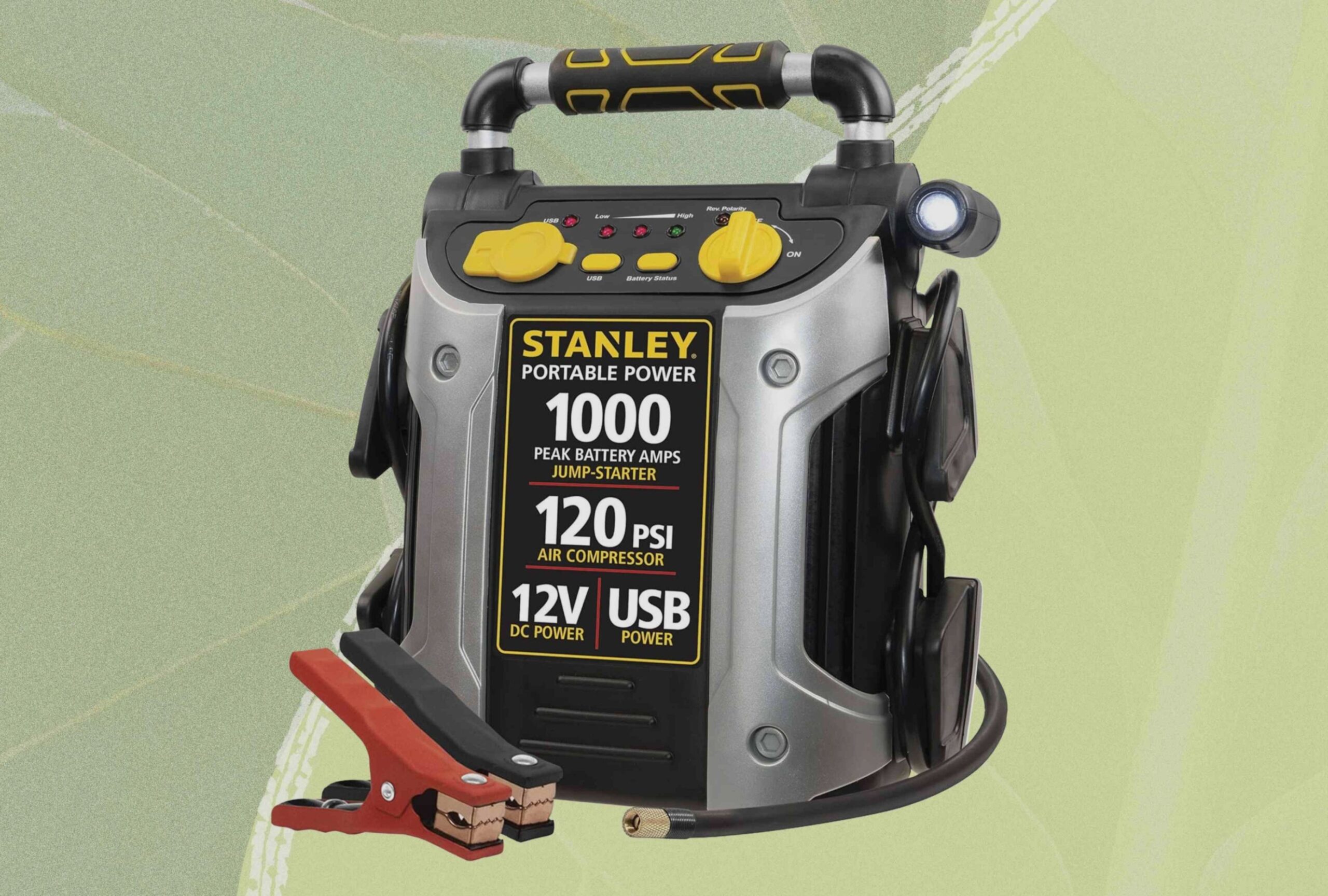
Stanley J5C09: The Mechanic’s Friend
This isn’t just a battery. It’s a jump starter and an air compressor in one box. Stanley designed it for automotive emergencies. It jumps 20Ah lead-acid batteries. It also inflates tires with a 120 PSI pump.
It doesn’t have a power cord. You charge it by plugging an extension cord directly into the unit. That’s a quirk. The air hose is short. But when you’re stuck on the side of the road with a flat tire and a dead battery, this unit solves both problems.
It has a 12V accessory port and a single USB-A port. Not a huge power station, but perfect for vehicle recovery. Keep one in your trunk.
Specs: 11.2 x 82 x 135 inches | 18 lbs | 21Ah | Lead-acid
Anker SOLIX F2000: The Hybrid Generator Extender
Whole-house power is hard. A single battery usually can’t run everything. The Anker SOLIX F2100 (or similar large models) is designed to work with a generator. You use it to bridge the gaps. Charge it up. Use it to power essentials when the generator is off or refueling.
It features an ultra-low idle power mode. This is key. It drains almost no power when sitting idle. You can leave it charged for five days without worrying. When you do need it, it charges incredibly fast if you pair it with solar and a generator simultaneously. Thirty to sixty minutes for a full charge.
It weighs over 90 lbs. It’s stable. Heavy. Durable. But solar charging alone is too slow for real emergencies. Use grid or generator for the fast charge. Use solar for maintenance. It keeps the lights on while your generator handles the heavy AC loads.
Specs: 256 x 118 x 148 inches | 915 lbs | 750Ah | Lithium
Ego Power Station: The Tailgate Powerhouse
If you own Ego power tools, you already own a battery. The Ego power station uses those same 56V batteries. You can slot in two 75Ah batteries for basic power, or fill all four slots with larger capacity batteries for serious runtime.
It fits in a car trunk. It’s about the size of a cooler. You can run lights, speakers, a mini-fridge, or a slow cooker. It’s quiet. Very quiet. The LED display shows exactly how much time you have left.
It’s not for high-drawing appliances like microwaves or toasters. But for backyard entertaining, tailgating, or poolside parties, it’s the ultimate social power tool. Just remember: if you’re going big, you’ll need the larger battery packs, which add up in weight and cost.
Specs: Varies by battery | Portable | 56V System | Lithium