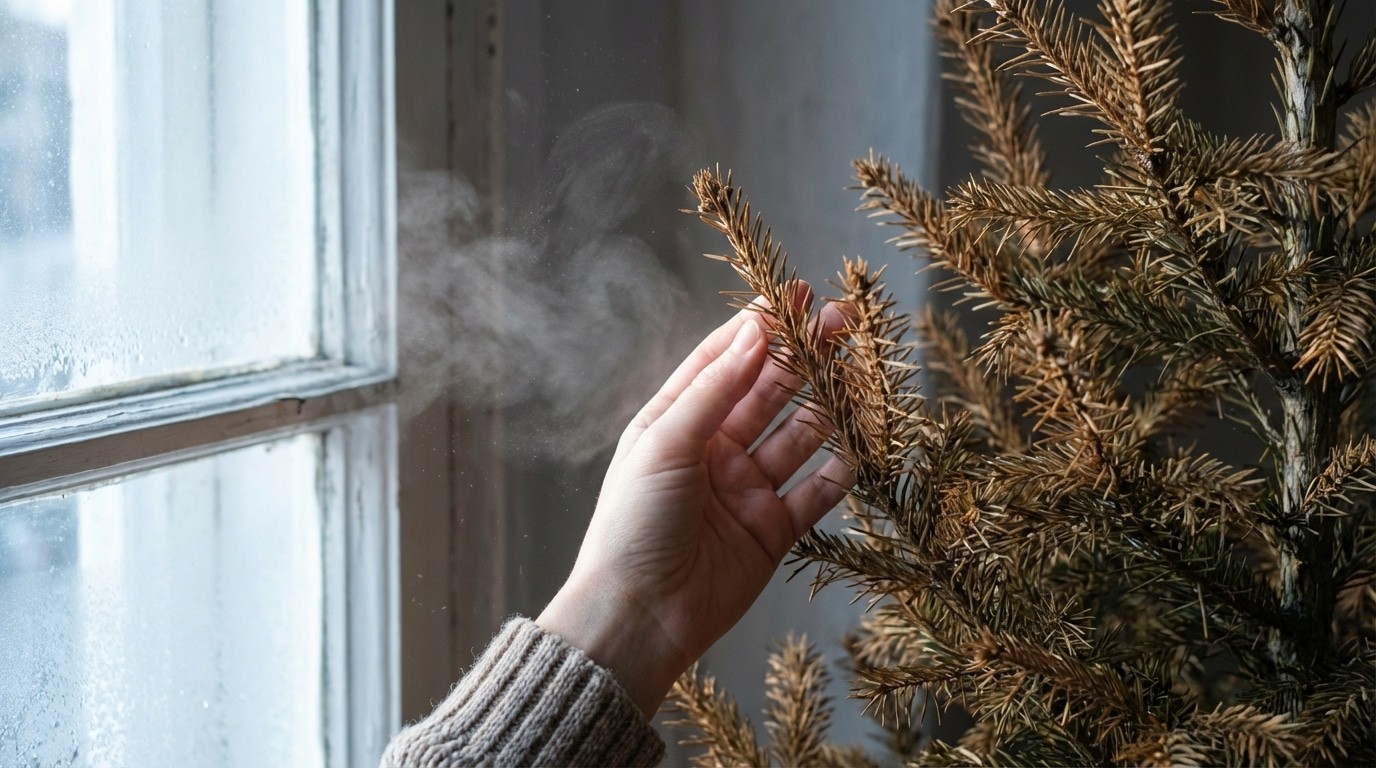
It’s December. The house smells like pine. Lights are strung. It’s perfect.
Or so you think.
Two days later, the carpet is covered in green dust. The tree looks ragged. It’s annoying. But it’s not bad luck. It’s physics. And mostly, it’s a placement error you’ve made every year.
We put trees by the window.
We want the curb appeal. We want the Instagram shot. We want it glowing in the window light.
You are killing it.
The Window Trap: Why Natural Light Is Not Your Friend
Here is the reflex. You see a big glass pane. You see a tree. You put them together.
It looks great. It also creates a microclimate that stresses a cut conifer to death.
A Christmas tree is a living thing that has been decapitated. It has no roots. No root system means no ability to draw up water from the earth to replace what it loses through transpiration. It is hanging by a thread. Literally.
When you place it near a window, you introduce three variables the tree cannot handle:
- Drafts. Every time you crack a window for fresh air, cold air rushes in.
- Temperature swings. The glass is cold. The room is warm. The tree is cold. The radiator turns on. The tree is warm. The radiator turns off. The tree is cold.
- Dry air. Cold glass chills the air right next to it. Cold air holds less moisture. The relative humidity drops.
This isn’t just a little dry. It is a desiccating cocktail. The needles turn yellow. They crumble. They fall.
The Radiator Effect: Double Trouble
If the window is enemy number one, the radiator is enemy number two.
And if you have a tree wedged between the window and the heater? You have created a death zone.
Radiators emit dry heat. They evaporate moisture from the air and from the tree’s needles simultaneously. The tree tries to regulate its temperature through its needles. When those needles dry out, the regulation fails.
The result is a rapid loss of foliage. The tree looks brown before Christmas even ends.
Do you really want a dead tree in your living room on December 26th? Probably not.
Where to Actually Put the Tree
You need stability. You need consistent humidity. You need no drafts.
Look for a corner. Away from the main traffic flow. Away from the heat source.
Specifically, follow this logic:
- No direct sunlight. The tree doesn’t need to photosynthesize anymore. It’s cut. Sunlight only adds heat stress.
- No cold drafts. Keep it away from exterior doors and window sills.
- No heat vents. Keep it at least three feet away from radiators or forced-air vents.
Ideally, pick a spot where the air is still. Not stagnant, but not moving. The ambient temperature should be cool but not freezing.
This might mean your tree isn’t in the “hero” shot for your social media. Good. The tree will survive. The photos can wait.
How to Keep It Alive: The Daily Grind
Placement is step one. Maintenance is step two.
A cut tree is a thirsty beast. It can drink up to 1.5 liters of water a day in the first week. It’s not a suggestion. It’s a requirement.
If the water level drops below the base of the trunk, a plug forms. A cork. Water cannot get in. The tree dies from the inside out, even if the stand looks full.
Here is the protocol:
- Check water levels daily. Twice a day if the house is hot.
- Use a proper stand. One with a reservoir large enough to hold a full day’s worth of water, so you aren’t topping it off every hour.
- Keep the cut clean. If you bought a fresh tree, the cut should be straight. If it dried out in the lot, recut 2cm off the bottom before bringing it in.
Simple Hacks for Longer Life
You can help the tree cheat death with a few low-effort moves.
Mist the branches.
Use a spray bottle. Lightly mist the needles. This raises the local humidity around the tree. It mimics the foggy conditions of a forest. Just don’t soak the lights. Water and electricity don’t mix.
Mulch the base.
Put some wood chips, bark, or moss around the base of the trunk. It’s decorative. It also traps moisture in the soil or the stand’s reservoir, slowing down evaporation.
Turn down the heat.
If possible, keep the room temperature moderate. Every degree lower slows down the tree’s metabolism. It slows down needle drop. It’s a small comfort for you, and a huge one for the tree.
The Bottom Line
We romanticize the holiday tree. We treat it like a static decoration. It’s not.
It’s a piece of nature under immense stress.
Stop putting it in the window for the view. Put it in the corner for survival. Check the water. Mist the needles.
Your living room will look better. Your carpet will be cleaner. And you might actually have a green tree when the music stops.
There’s nothing worse than staring at a brown skeleton on January 2nd. Avoid that. Pick the corner. Add water.
The magic lasts longer that way.
Why Your Christmas Tree Dries Out (And How to Fix It)
You put it there for the photos. Natural instinct says the window is the best spot. It catches the light. It looks festive. But keeping your evergreen near that drafty glass is a fast track to a brown, brittle mess by December 26th.
Stop putting your tree in direct sunlight or near heat sources. That heat sucks moisture out of the needles faster than you can blink. The result is a shedded floor and a sad-looking tree. Instead, move it to a cooler corner. Away from radiators. Away from vents.
The Water Rule You Can’t Ignore
A cut tree doesn’t have roots. It can’t pull water from the soil. It drinks through the trunk. If the water level drops below the cut end, the seal forms. Capillary action stops. The tree dies.
Check the water reservoir daily. Not every other day. Every day. Some trees drink a gallon on the first day. More after that. Use a stand with a large tank. If you have to carry water from the kitchen to the living room three times a day, you’re doing it wrong.
“The most important factor for a long-lasting tree is water availability at the base.”
Use fresh water. Not milk. Not beer. Just water. Some people add sugar or aspirin. The science doesn’t support these hacks. The tree doesn’t need food. It needs hydration. Stick to plain tap water.
Choosing the Right Species for Longevity
Not all trees are created equal. If you want one that stays green past New Year’s, pick wisely.
- Douglas Fir : Holds needles well. Good scent. Needs water.
- Fraser Fir : Stiff branches for heavy ornaments. Retains needles for weeks.
- Balsam Fir : Classic scent. But needles drop if it dries out too much.
- Scots Pine : Tough. Handles dry air better than firs.
Avoid trees with dry, brown needles at the store. Shake the trunk. If needles fall off easily, put it back.
Maintenance Tips for DIY Homeowners
- Recut the trunk : If the tree has been sitting for hours before you bring it home, cut two inches off the bottom. This opens the capillaries. Use a sharp saw. Clean cuts matter.
- Stabilize the stand : A tip-over is a safety hazard. Anchor it to the wall if you have pets or small children.
- Keep it moist : Wipe down needles with water occasionally if your air is very dry. This adds a tiny bit of humidity right at the source.
Why This Matters for Your Planet
A dried-out tree gets thrown out early. That’s waste. That’s landfill space. Keeping your tree fresh means you delay the disposal date. You might even keep it for a second year if it’s a live tree in a pot.
“Changing your habits doesn’t mean sacrificing aesthetics. It means respecting the plant.”
It’s not hard. Move the tree. Check the water. Pick a tough species. The tree rewards you with green needles. The planet rewards you with less waste.
The magic lasts longer when you treat it like a living thing. Not a decoration. A living thing.
Your hands will