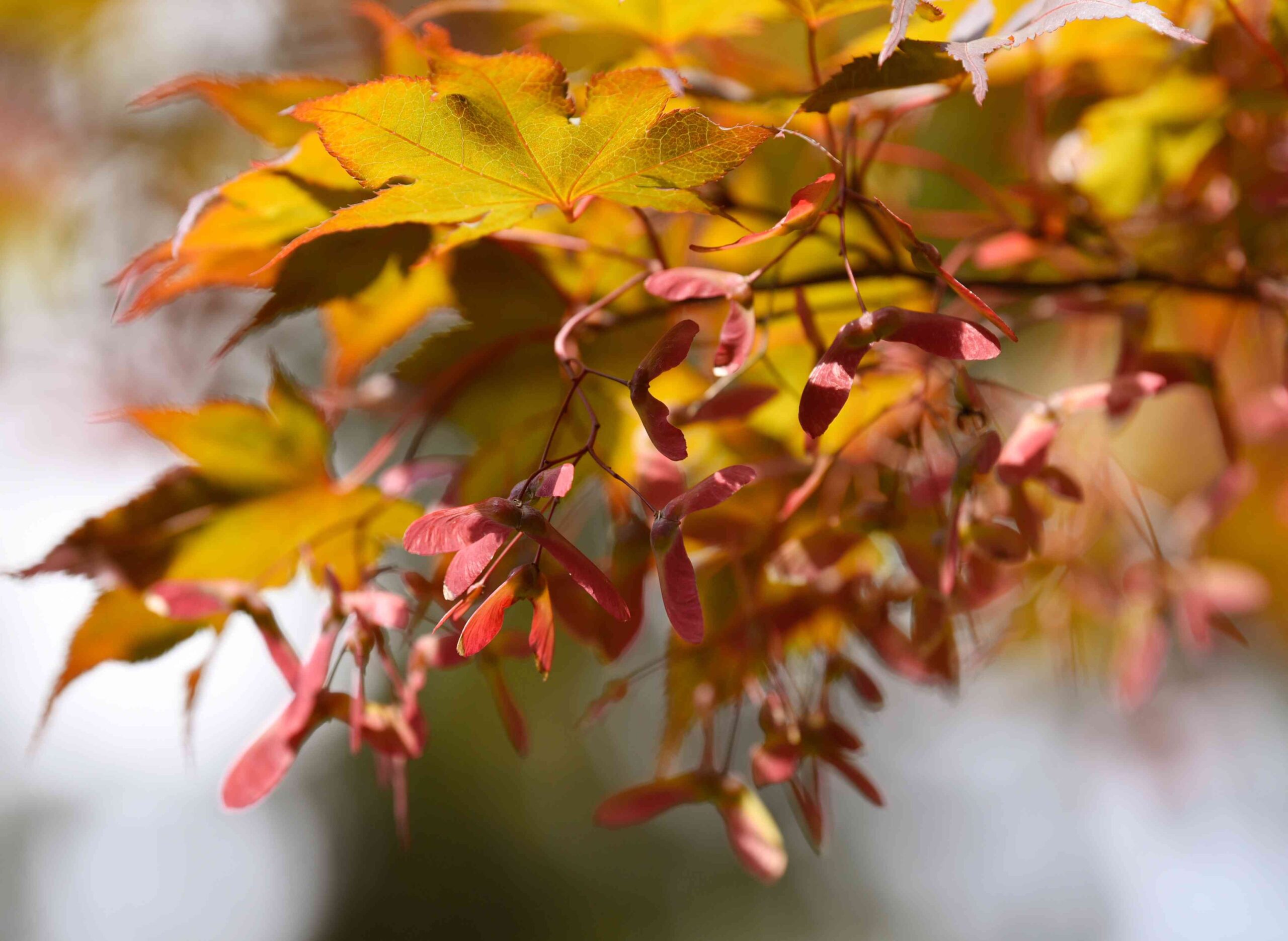
Nature loves a good aerodynamic trick. Look up. See that spinning thing falling? That is a samara.
Helicopter seed. Winged fruit. It does not matter what you call it. The goal is simple. Distance. Unlike an apple, which thuds into the mud right under its mom, a samara glides. It twists. It drifts. Some fly like propellers, others like discs. They want to get as far from the parent tree as possible. Why? Competition is bad. Space is good. 🌿
Here are the trees that rely on this aerial strategy to spread their genetics across the landscape.
The Maples: The OG Spinners
You cannot talk about samaras without talking about maples. They are the double-winged masters. The Red Maple (Acer rubrum ) is native to the eastern US and grows fast-ish. Faster than the noble sugar maple. Slower than the frantic silver one.
It puts on a show. Red. Orange. Yellow. The flowers match. Bright red clusters in early spring or mid-green in the leaves above, gray below. But the fruit is the headline. Two-winged reddish helicopters spin off.
– Zones: 3 to 9
– Light: Full sun to partial shade
– Soil: Pick whatever you want. Sand, clay. It does not care.
The Red Maple chooses the path of least resistance for its soil.
Then there is the Silver Maple (Acer saccharinum ). Speed demon. It gains two feet a year. It wants to be near water. Like, really near water. Riverbanks are its happy place because it tolerates standing water and erosion chaos better than anyone else.
Its seeds are prolific. They drop in pairs, greenish-yellow turning red, and sprout anywhere they find a crack in the dirt. If you leave an ash tray out, these trees will colonize it.
– Zones: 3 to 9
– Bloom: Red, yellow, green mix
– Soil: Average to wet. It loves mud.
The Norway Maple (Acer platanoides ) is a problem child. Also called Harlequin Maple. It is invasive. It steals sunlight. It spreads faster than the natives and tolerates deep shade. Bad actor. It creates a dense canopy that smothers native woods. Green flowers in May, yellow fall foliage. But keep your guard up.
And then the Japanese Maple (Acer palmatum ). The beauty. The delicacy. Lacy leaves. Palm-shaped lobes. Five to nine of them. It stays smaller, 15 to 25 inches. A backyard star. Its flowers are tiny red or purple dots, leading to half-inch samaras. Not as aggressive. Much prettier.
– Zones: 5 to 8
– Color: Red, orange, purple magic
– Soil: Moist, acidic, well-drained. Treat it with care.
The Elms and The Weird Ones
Elms are classic samara producers. The Winged Elm (Ulmus alata ) is a small deciduous tree. It grows tall in the forest shade, short and wide in the open sun. Branches arch up. The bark shifts from red-brown to ash-gray. Leaves are small, dark green on top, hairy underneath. Yellow in fall. Red flowers in late winter.
Its samaras are flattened with fuzzy edges. Cute, but not fast flyers.
– Zones: 6 to 9
– Soil: Flexible. Clay, rock, sand.
The Common Hoptree (Ptelea trifoliata ) feels like a shrub that got confused about its height potential. Only 15 to 20 inches. Dense. Round. It makes a good hedge because people hate its smell when the leaves crush, so nobody picks it.
It smells bad. That is the trade-off for privacy. But its samaras last. From late summer deep into winter. The seeds mature while the world sleeps.
– Zones: 4 to 9
– Bloom: Tiny, greenish-white, fragrant (if you like bitter aromas)
– Soil: Dry to medium. Well-drained.
Then there is the villain of the woods. Tree of Heaven (Ailanthus altissima ). Noxious weed. Pennsylvania outlaw. Grows to 80 feet fast. Bark peels from green-brown to gray. Leaves are massive. 10 to 40 little leaflets on one stick. And the smell. God, the smell. Like cat pee or rotting peanuts. Crush the leaf and you know you did something wrong.
The female trees produce twisted samaras. Brown clusters that hang around through the snow. They ripen in October. They do not let go. They are stubborn.
– Zones: 4 to 8
– Soil: Garbage. Poor soil. Dry soil. It grows everywhere.
– Bloom: Greenish. Invisible.
Tall Shades and Ashes
The Tulip Tree (Liriodendron tulipier ) is named for its flower shape, not its leaves. Bright green leaves turn golden yellow. Flowers appear in June, orange centers in yellow-green petals. Big flowers on big trees.
These giants grow quickly. 100 feet tall. But do not expect flowers early. The tree might be 15 years old and still no blooms. Just leaves. Eventually, it produces conical clusters of samara fruit. Like little pinecones made of spinning wings.
– Zones: 4 to 9
– Bloom: Yellow-green, orange core
– Soil: Acidic. Moist. No salt. Salt kills it.
From Bolivia to Texas, the Tipu Tree (Tipuana tipu ) serves as shade in the warm parts of the US. A legume tree, single trunk, high canopy. Yellow or orange flowers in summer. They look gorgeous. But they turn into brown seed pods. Large, woody, looking like samaras but heavier.
- Zones: 9 to 11. Keep it warm.
- Bloom: Bright Yellow
- Soil: Clay, sand, loam. Acidic preferred.
Finally, the ashes. Green Ash (Fraxinus pennsylvanica ) and Velvet Ash (Fraxinus velutina ). Ash trees are everywhere in the suburbs. The Green Ash handles city life. Pollution, salt on the roads. It tolerates it. Diamond-pattern bark. Purplish flowers on separate trees in April.
Female Green Ashes produce drooping clusters of wings. Up to two inches long. They self-seed. Everywhere. You look at a sidewalk and there is a baby ash. Then there is the Emerald Ash Borer. A beetle that hates these trees. Watch them closely.
Velvet Ash is western. Native to the US, loves California and Texas. Fast grower. Green flowers in spring that look boring. But the fall foliage? Brilliant yellow. And the fruit. Showy samaras, 3 to 6 inches long.
- Velvet Zones: 7 to 8
- Velvet Soil: Alkaline or acidic. It does not care. Just drain the water.
Questions About Seeds
Are they edible?
It depends. Maple seeds are generally safe to eat. People snack on them. Boiled. Raw. Whatever. Sycamore seeds are different. Those can be poisonous. Do not guess.
Why do trees do this?
Evolution is lazy but smart. Wind carries the seed. The parent tree stays put. The offspring travels. It survives better when it is not competing for water with its father. It overcomes predators. Squirrels get hungry, eat hundreds, but thousands miss the mouth and hit the ground. One becomes a tree. 🍁