



Believe it or not, in the mid-1960s air conditioning was a luxury. Only about 10 percent of US households had it. In fact, southern families slept on their porches just to survive the summer. You can also pitch a cot on the deck if the air conditioning doesn’t start right away.
A tripped circuit breaker is often the first guess, but it’s rarely the real cause. More common problems are power supply faults or refrigerant leaks. When you understand why your system failed, you can fix it faster and prevent future failures.
The High Cost of Comfort
Today, nearly every American home has some form of air conditioning. Nine out of ten homes have air conditioning. These units consume about 18% of the annual electricity consumption of households. The demand is huge. In 2013 alone, Americans spent $7.2 billion installing or replacing central air conditioning. This number exceeds every home improvement category except kitchens and bathrooms.
We are used to the cold. When the hot season comes and the air conditioner stops, people panic. The maintenance services are always busy. In May 2018, when Indianapolis was experiencing a record heat wave, one technician told a local station that he was working six days a week. 14 hours a day. Just to answer calls.
5: Mechanical Issues
If the thermostat is requesting cooling but nothing happens, the problem may be within the machine. Mechanical failures are usually not signaled by warning lights. They just stop.
The most common mechanical cause is compressor failure. This is the heart of the outdoor unit. When it breaks down or burns out, the system becomes dysfunctional. Often the buzzing suddenly disappears. Or maybe it was a loud clunk.
Capacitors are also a common point of failure. These small components store electrical energy to help start the compressor and fan motor. If the capacitor fails, the motor will not be able to perform the jump-start required. The fan may spin slowly or not at all. The compressor may try to start and then immediately stop.
The relay can get stuck or malfunction. These are essentially switches that control power to various components. A stuck relay may cause the fan to continue operating even when the AC is off. Alternatively, power to the compressor may be cut off completely.
Next, check the fan motor. If your indoor blower motor is seized, it can overload the system and trip internal protection devices. You won’t hear air moving. The ducts remains silent.
Lubrication is also important. Motors have bearings require oil. Over time, these bearings dry out. Metal rubs against metal. Friction grows. Heat rises. Eventually the motor eventually locks up.
Diagnosing these problems requires a multimeter and basic electrical knowledge. If you have any concerns about working with live wires, please consult a professional. However, if you’re handy, checking the capacitors and relays is a good first step. They are relatively cheap parts. Easy to replace.
The heat is approaching. You don’t have to wait for temperature spikes to determine if your system has a problem.
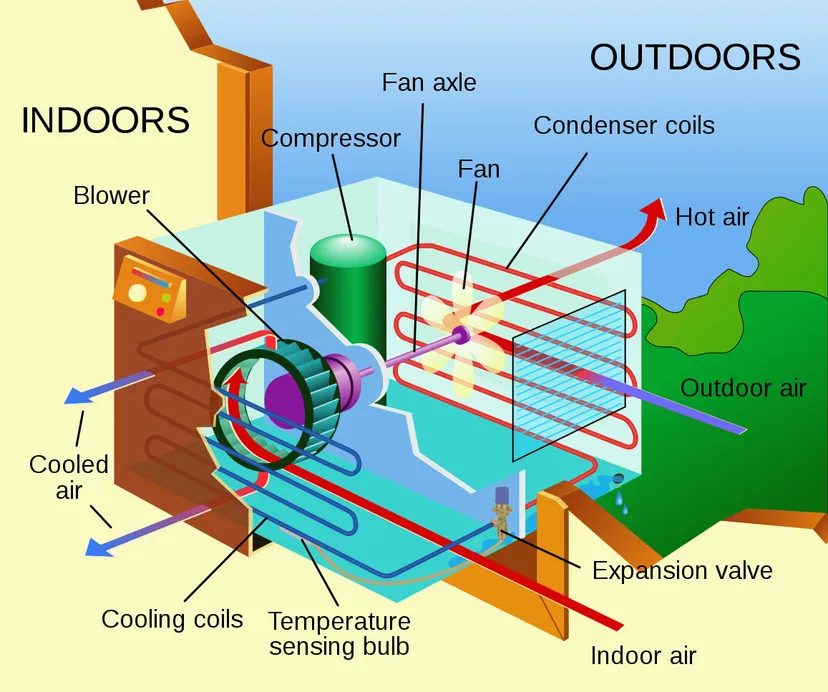

In theory, the goal of an air conditioning system is simple. Removes heat from the inside. Pushes cold air back. The engine that runs this process is a chemical called a refrigerant. If you look closely, there are five major players involved in heat transfer.
There is a fan motor. There is an evaporator coil to cool the air. There is the compressor, It acts as an electric pump for the system. Then on the outside is the condenser coil which is responsible for removing the heat. Finally, the expansion device controls the flow rate.
These parts are divided into two different areas. In your home, a fan blows air over a cooled evaporator. Cool air moves through the ducts, cooling the living space. Outside, the compressor and condenser coil work together with another fan and remove the hot air sucked in by the refrigerant. The expansion valve is located between them and precisely regulates the amount of refrigerant flowing from the inner coil to the outer coil.
Signs of mechanical failure
Any of these parts can be damaged. The question is not “if” but “when”. If the fan motor breaks down, the outdoor unit will not be able to dissipate the heat. The system is down. If the compressor fails, the refrigerant will no longer circulate between the indoor and outdoor units.
Replacing these parts is usually not economical. New compressors are expensive. They often cost about the same as a new device. We recommend that a professional HVAC technician perform an annual inspection. Prevent premature mechanical failure and save money in the long run.
“Home central air conditioners are so reliable that homeowners often overlook routine maintenance,” Francis Dietz, vice president of public affairs for the Air Conditioning, Heating and Refrigeration Institute, said in an email. “However, these devices require care to function properly.”
This reliability is a trap. Stop paying attention. Then things break.
The Clogged Air Filter
Now let’s move on to the second problem on the list.
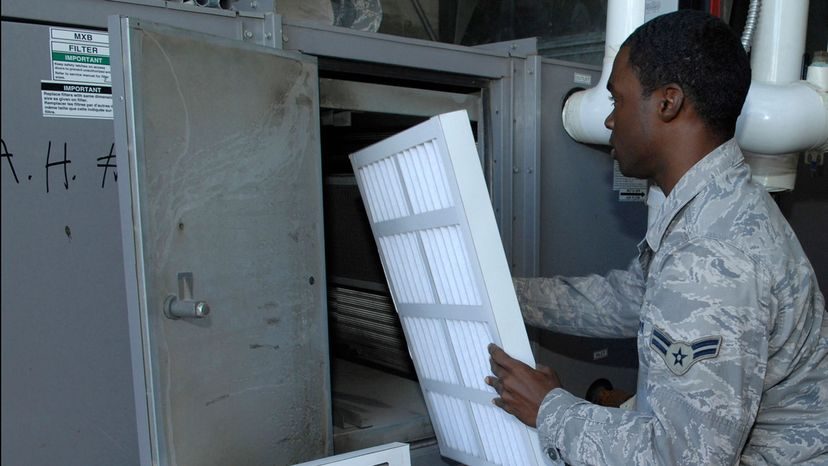

Homeowners who neglect basic maintenance are often left staring at a lifeless unit. Dietz points out that neglecting to change air filters is the biggest cause of system failure.
If you don’t change the filter, the system has to work overtime. It tries to force cold air through the clogged mesh. This extra stress can cause components to wear out quickly.
Worse could happen. It’s not uncommon, just extreme. Air is trapped. There is no escape. The evaporator coil freezes. This pipe network contains refrigerant. It absorbs heat and moisture around the house. If ice forms, the coil will fail. A complete replacement remained the only option.
The Filter Fix
Consumer Reports recommends changing the central air conditioning filter monthly. If your unit runs constantly, you need to be more diligent. Pets shed hair. This causes the filter to clog faster.
Many modern thermostats can handle this. Advanced models send automatic alerts. You will be notified before the filter blocks the system. It’s a small fix that prevents big repairs.
3: Low refrigerant
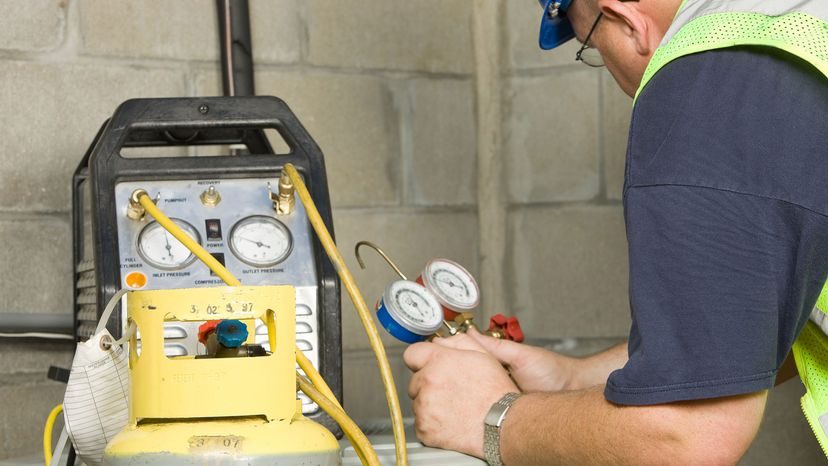
The cold liquid refrigerant evaporates in the heat of your home. It absorbs heat and turns into a gas. Hot gases are pumped to an external condenser unit. There, the heat is led to the outside air. This cycle turns the gas back into a liquid. The cycle continues. The cooling stops if there is not enough refrigerant. This amount must be exactly as per the manufacturer’s instructions.
There are only two reasons for the low level. One is improper installation. The technician didn’t add enough. Another reason is more likely. There is a leak in the system. 90% of refrigerant shortages are caused by leaks.
Simply adding refrigerant is a waste of money. It does not address the root cause. You need a well-trained HVAC technician. They find a leak. They will repair it. After testing the fix, they charge the system the correct amount. After that, Your HVAC system should then be set your HVAC system.
Almost all AC systems today use halogenated chlorofluorocarbons (HCFCs). This is R-22, commonly known as Freon. They are phased out for environmental reasons. Between 2020 and 2030, ozone-safe hydrofluorocarbons (HFCs) will become the norm.
2: The outdoor unit of the air conditioner is blocked.
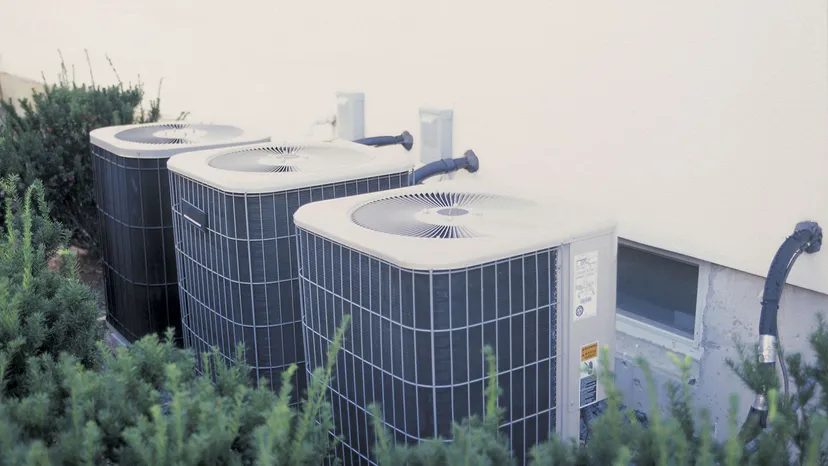
Not paying attention to your home’s surroundings can cause the indoor temperature to rise faster than expected. Shrubs and dense vegetation often grow in the space around outdoor condensers. This obstruction blocks the airflow that is so essential for the system to function efficiently. If the coil is blocked by dirt or leaves, it affects the heat transfer. The unit has to work harder to produce cold air. This extra stress can cause premature system failure.
Homeowners must maintain clear space around and above the outdoor unit. Use a regular garden hose to rinse off dirt and debris from the fins. Do not use a pressure washer. This force can bend the fragile metal fins and damage the unit. Lawn debris and mud from heavy rain are common culprits. They collect in the gaps and block the air flow.
Consumer Reports recommends keeping your distance to ensure proper ventilation. Leave 2 to 3 feet (60 to 91 cm) between outside unit and plants and backyard structures. An additional 5 feet (1.5 meters) of space is required between the top of the unit and hanging tree branches. If you leave this space open, the air conditioner will run cooler and last longer.
1: Small Unit or thermostat problem
If you’ve cleared the debris and trimmed the bushes and your home is still stuffy, there may be a problem with the unit itself or the controls. A small unit cannot withstand the load of a large house. Expanding or adding a sunny room might be undersized of the original HVAC system. It continues to operate without reaching the set temperature.
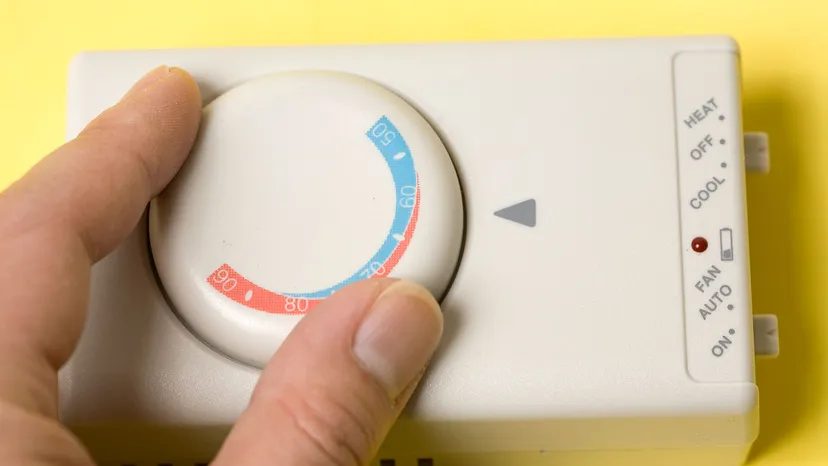
Also check the thermostat settings. Are you in a “cool” mode? Is the fan set to “auto” or “on”? Sometimes the problem is as simple as a dead battery or a faulty sensor. If the thermostat thinks the room is cooler than it actually is, the compressor will not start. Replace batteries first. If the problem persists, consider upgrading to a smart thermostat. These units can learn your schedule and optimize cooling cycles. However, if the unit is too small for the space, no amount of adjusting the thermostat will solve the root cause. You may need an expert to calculate the correct BTUs for your specific footprint.
The core problem with many cooling systems is not aging. I’m not good at math.
Todd Washam, director of industry and external relations for the American Air Conditioning Contractors Association (ACCA), has seen it all. His group represents approximately 4,000 contractors across the United States and is responsible for setting industry standards. What is his opinion? Most failures are caused by improper installation.
It starts with calculations. The installer must accurately determine the amount of cooling required for a particular home. Next, attach the unit to an appropriately sized pipe.
If the pipe is too small, the system will clog. This device forces air deeper into the bottle neck. Increased wear in all parts. Life expectancy is getting shorter. What if the device itself is too small for the space? The house is never cool. If I keep running, the result is zero.
Thermostat calibration error
Another silent efficiency killer is an improperly adjusted thermostat. This often happens with older selectors. Mechanical wear. The signal is unclear.
If there’s a problem with your thermostat, your cooling system isn’t getting the instructions it needs. We don’t know when it will start. I don’t know when it will end. The required temperature has not yet been reached.
The fix is easy.
- Renovation: Have your HVAC professional renovate your existing unit.
- Change: Change to a new programmable digital unit.
Numerical units are precise. By communicating with the system, it helps save energy. Some devices also allow remote programming via smartphone or tablet. You can adjust the settings while you work. Don’t wait until you get home.
Diagnose the system
Now that you understand these common air conditioning problems, you can take a fresh look at your setup.
Is the air weak? Check the pipes. Is the room warm when the thermostat shows 70 degrees? Check the calibration.
Do-it-yourself diagnostics can save you money. It also avoids calling a technician for simple wiring problems or dirty filters. But what if the calculations made during installation are wrong? This is a much bigger task. You may need to do a full load calculation to see if your system is keeping up.
Most homeowners don’t realize how much their habits affect their HVAC load. Close the blinds when the sun is at its best. Seal the windows. These small actions reduce the demands on already struggling units.
Our goal is not only to cure pimples. This prevents the interruption from happening again. This means understanding what is on the other side of the wall. behind the thermostat.

