


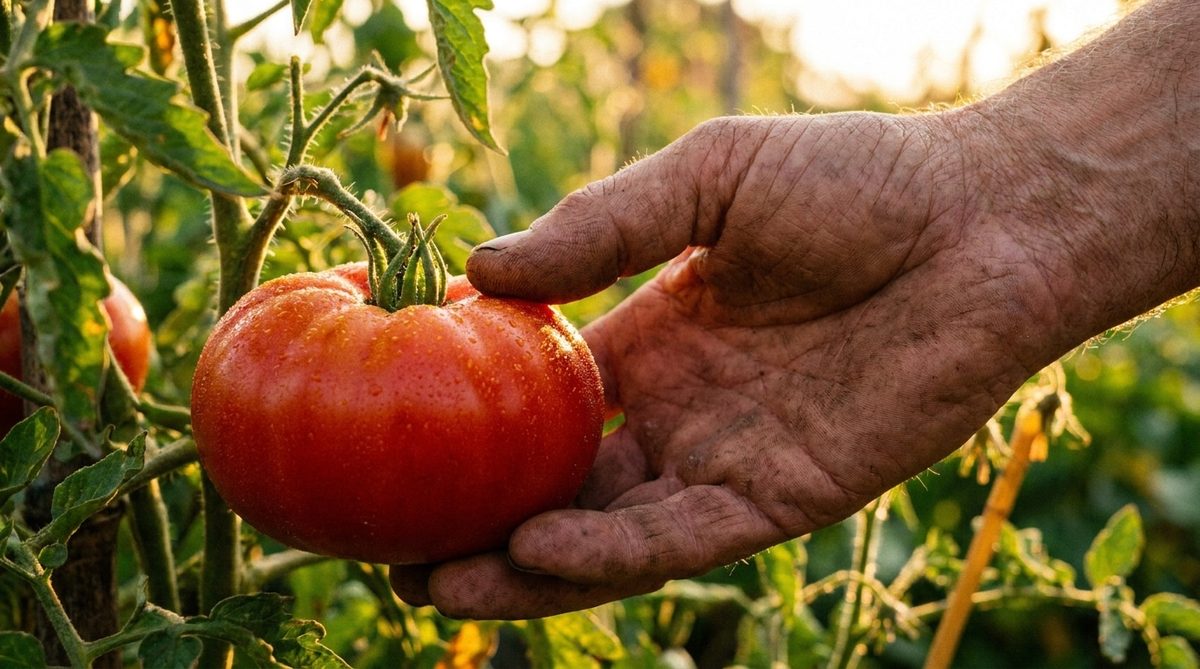
The summer heat doesn’t just burn your garden. It sets a trap.
You can see the mercury rising above 35°C. I’m worried about my tomatoes wilting in direct sunlight. It’s an obvious fear. But the real danger comes when the heat breaks.
The shock to the plants isn’t from the cold. This is due to the sudden large volume of water. When the temperature drops, it rains and or you hose down the beds, the fruit grows quickly. The dry heat of the weeks makes the skin tense, fragile and unable to withstand stress. It cracks.
This isn’t just cosmetic. Cracks can cause diseases. They bring rot. One minute you have healthy fruit. The next, you have a lost harvest because you didn’t manage the transition.
Why do tomatoes panic when exposed to high temperatures?
Plants are survival machines. When the temperature suddenly rises above the critical 35 °C, your tomato plant switches to emergency mode. It stops feeding the fruit. Photosynthesis slows down. Water and sugar are transferred to the leaves to keep the plant alive, not to grow tomatoes.
The fruit goes into dormancy. It hardens. The skin loses its elasticity. Exposure to the sun dries it out.
Then came the storm. Or after a few days of dryness, you decide to water it properly.
Water rushes into the roots. It travels up to the fruit. The inside expands rapidly. The outside skin, now like parchment paper, cannot stretch. It explodes.
These cracks open the door to fungal infections. Botrytis and other rot organisms move in immediately. If you’re not careful, A single cracked tomato can compromise the whole cluster.
The key isn’t preventing the heat. It’s managing the water during the drop.
Drip irrigation method to prevent cracking
Regularity is required. Not intensity.
Deep, infrequent watering is better than shallow, daily sprinkles. The purpose is to maintain stable soil moisture. Avoid cycling from completely dry to wet.
Here’s how you can stabilize your environment:
**Install the shade cloth. **
Use a 30-40% density filter. This lowers the temperature around the plant by several degrees. It reduces the stress on the plant. It slows the drying of the soil.
**Mulch heavily. **
Spread 8-15 cm of straw, hay or wood chips around the base. This acts as an insulator. Keeps roots cool. Prevents rapid evaporation of moisture.
**Water the roots. **
Do this early in the morning. Never water the leaves. Wet leaves plus warm, humid air equals disease. Direct water to the soil.
** Prepare the soil. **
Mix mature compost before summer arrives. Healthy soil retains water longer. It buffers against dry spells.
Save the harvest and extend the season
Most gardeners make the mistake of pruning too much during heat waves. They believe that removing the leaves will reduce the amount of water the plant needs.
This is wrong.
The leaves provide shade for the fruits. A dense canopy acts like a natural sunshade. Prevents sunburn. It controls the microclimate. Leave the leaves on.
If another heat wave is expected, harvest green or almost ripe tomatoes. Bring them inside. They will finish ripening on the counter. This protects it from the extreme fluctuations of the outside world.
Check your plants daily. Collect the tomatoes immediately if you notice cracks on the surface. They won’t store well, but it’s edible. Remove rotten fruit immediately to prevent the spread of the disease.
Eventually, when temperatures stabilize, growth resumes. The plant recovers. You can survive the summer by preparing the soil carefully and watering thoroughly.
Perfection is not the goal. This is resilience. You can’t control the weather. Only you can control how your garden reacts to it.
Keep the water flow steady. Leave the soil covered. Observe the fruit.
Heat also passes through it. Your tomato will probably survive.


