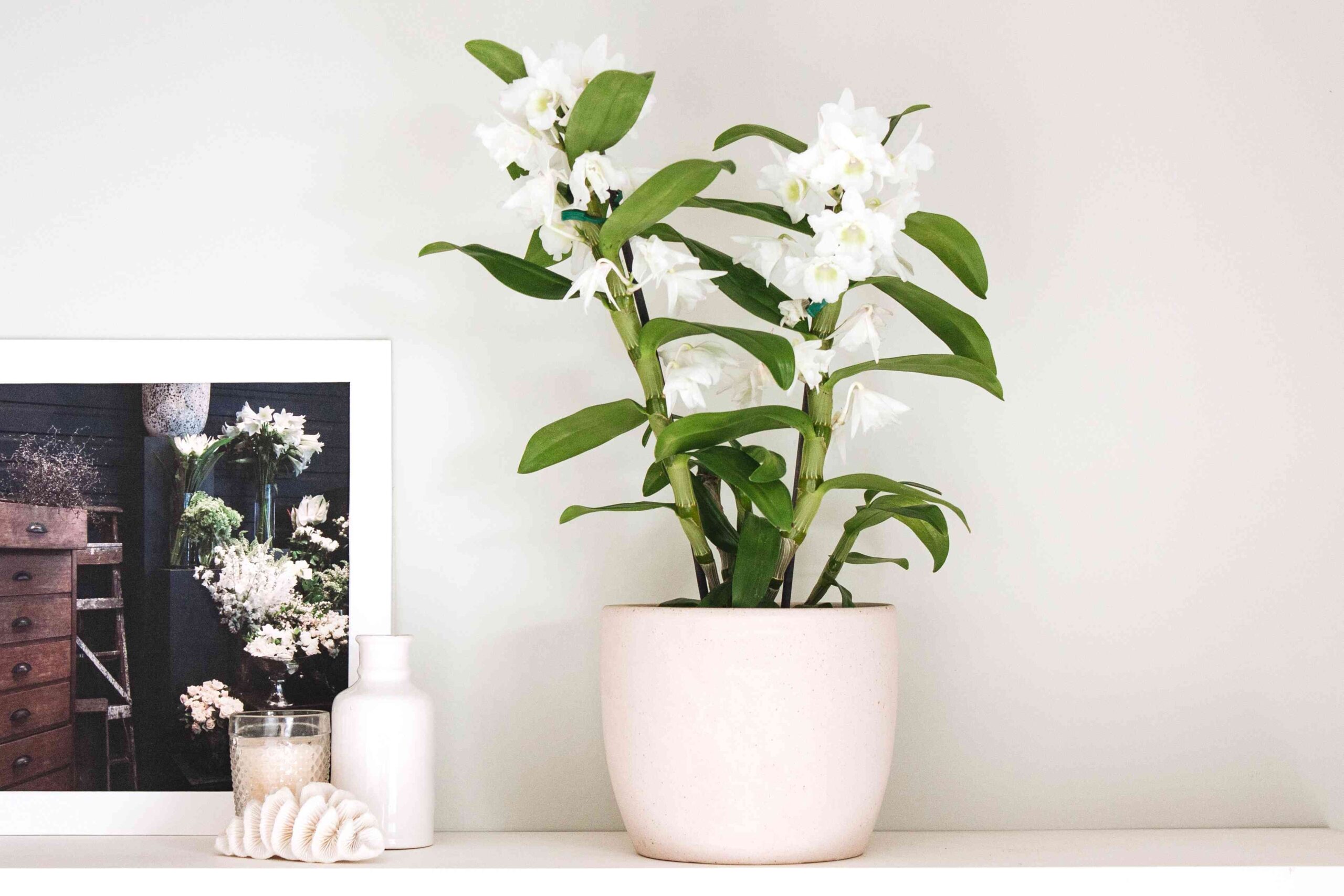
Most orchids feel like delicate guests in your house.
Dendrobiums don’t.
They’re chunkier, tougher, and honestly, kind of rude if you don’t know the rules.
They come in hundreds of species, so there is no single “right” way.
But generally?
They hate wet feet. They love bright light. And they demand a rest period in the winter.
Skip the rest, get no flowers.
It’s that transactional.
The Setup: Potting and Placement
Don’t drown it in soil.
Orchids grow on trees in the wild.
Give them a chunky, bark-based commercial orchid mix. It drains fast. It keeps roots breathing. If the roots sit in water for hours, they rot. Game over. 🛑
Size matters here, but maybe not how you think.
Cramp the roots a little. A smaller pot keeps the medium drying out faster between waterings.
Where does it live?
Your brightest window.
South-facing if you have one. East is okay. West is risky unless you filter the sun with a sheer curtain in summer.
No windows? High-output grow lights are mandatory.
Watch for this sign: tiny offshoot plants popping up on the canes. They’re called keikis.
That means your plant is stressed. Specifically, it’s starved for light.
If you see them, move it to a brighter spot immediately.
Water and Food: The Rhythm
Here’s the part most people mess up.
The growing season (spring and summer) vs. the winter rest.
During growth:
– Keep it warm. 70–85°F during the day. Let it drop 10 degrees at night.
– Water when the mix feels almost dry to the touch. Stick your finger in. If it’s damp, wait.
– Feed it weekly with a balanced orchid fertilizer.
In the winter:
– Temperature drops. Aim for about 55°F.
– Watering slashes down. Don’t let it die, but don’t let it swim.
– Stop the fertilizer.
Why?
The cold snap tricks the orchid into thinking summer is coming. It triggers bloom initiation.
Skip the chill? You just get green canes. Beautiful green canes that do absolutely nothing for you.
“The appearance of many tiny offshoots… indicates that the plant isn’t getting enough light.”
Humidity matters too.
Dry air equals crispy leaf tips. Aim for 50-70%.
Don’t like humidors? Put the pot on a tray with wet pebbles. Just keep the roots above the water line.
Know Your Dendrobium
The genus Dendrobium is massive.
There are deciduous types that drop all their leaves in winter and need zero water until new shoots appear.
There are evergreen types that just keep going.
Phal-Dens: The common store-bought ones.
Evergreen. Bloom in fall.
Want them to bloom again in spring?
Give them three or four weeks of cooler, drier rest after they finish flowering.
Spatulata: Also called Antelope Orchids.
Why?
The petals twist like antelope horns. 🦌
These don’t need a winter rest. They’ll bloom on their own if you keep them warm and watered.
Formosae:
Look like fuzzy black canes.
They hate heat.
If it’s 90°F outside, these orchids are panicking.
They want cool nights (50–60°F) all year round.
Propagation: Keep It Simple
Forget seeds.
Unless you have a lab and a fungal culture, growing dendrobiums from seed is a nightmare.
It requires symbiotic relationships with soil fungi that don’t happen in a jar on your counter.
Instead, divide the plant.
Wait until the orchid has at least four thick, leafy canes.
- Dig it up. Gently.
- Wash the roots. Remove all old potting material.
- Cut. Use a sharp, sterile knife to slice through the rhizome. Keep root masses intact.
- Repot. Place sections in fresh mix.
- Wait.
Don’t water for a week.
Let the cuts callus over.
Water thoroughly after seven days.
Pests and Problems
Mealybugs.
White, cottony fuzz hidden where the leaf meets the cane.
They hide deep.
Spray a mix of water, rubbing alcohol, and a drop of dish soap right in the crevices.
Repeat until the cotton is gone.
Sun scald.
White or brown patches on leaves?
That’s burns.
Too much direct sun in July will fry the tissue.
Hang that curtain.
Yellowing leaves.
Usually means you’re drowning it.
Sometimes it means the water has too much salt buildup from tap water.
Flush the pot with rain water or distilled water to leach out the salts.
Or switch to distilled water for regular watering.
The Bloom
When it works?
It’s spectacular.
Sprays of flowers that last six to eight weeks.
You can cut them for a vase. They survive longer than most cut flowers.
But it won’t work if you treat them like cactus.
They need consistent light. They need the seasonal rhythm of wet-then-dry and warm-then-cool.
Ignore the rhythm, and you have a houseplant that looks nice and does nothing.
Respect it, and you get color every year.
Easy enough?
Maybe.
Orchids always demand more than they promise.
Just wait for the next batch of leaves to drop and see what happens. 🌿