If you feel like you are constantly wiping surfaces only to see dust return within hours, stop. It’s disheartening. Especially when you visit someone’s house and it is spotless. Their floors shine. Their shelves breathe.
What’s the secret?
It isn’t magic. It’s mechanics. Most of us lose the battle because we fight it wrong. We treat dust like a moral failing rather than a physical constant. You cannot keep a home sterile. Open a window, walk in from outside, breathe, and dust arrives.
The people with dust-free homes don’t clean harder. They cheat the physics. I asked the cleanest people I know. They don’t love cleaning. They love systems.
Tools matter more than effort
First, admit that “completely dust-free” is a fantasy. It’s okay. But you can manage the invaders.
Here is the problem: standard microfiber dusters are often just paintbrushes for dirt. They push dust around. It settles three feet to the left. You wipe it. You’ve accomplished nothing.
You need damp dusting.
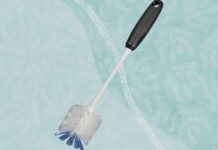
Add moisture. Stickiness captures particles instead of relocating them. You can wet a cloth, sure. Or use something with texture. A tool with ridges traps the grit physically. Rinsing the tool in the sink proves it worked. The sink runs cloudy. Your home gets cleaner. It works for pollen too.
Ban footwear
Are you a shoes-off house? You should be.
Shoes are sponges for the outdoors. They soak up pollen, dirt, bacteria, and dry mud. They walk these payloads across your floors every time you step inside.
Leave them at the door.
If you hate the visual of shoes by the entryway, hide them. Use a cabinet. Make it narrow if space is tight. The goal is frictionless removal. Take them off before you fully enter the sanctuary.
Double your mats. One outside to scrape off the big debris. One just inside to catch the fine powder before it spreads. Use coir for the outer one. It’s abrasive enough to work.
Let machines handle the air
Dust isn’t just on surfaces. It’s floating.
Air quality suffers when you ignore airborne particles. An air purifier isn’t just for smoke or pet dander. It pulls dust out of the volume of air and traps it.
But you have to buy the right filter. Cheap plastic cyclones do little. You need a HEPA filter. It catches the microscopic stuff that usually settles on your TV screen. Set it on a schedule. Let it run while you sleep. Don’t think about it.
Why do manual labor when a fan can do it for pennies per day?
Clutter is a dust magnet
Things accumulate dust. Surfaces with objects are harder to clean than bare ones.
Every book, figurine, or stack of mail is a shelf for gray fluff. Dust settles on clutter, then hides under it. This buildup creates dead zones where cleaning rarely reaches. Worse, trapped dust holds moisture. That leads to damp. Mold. Ruin.
Move things. If it sits in a corner or high up, question if it belongs there. High shelves are dust graveyards. Corners are dust traps.
Keep surfaces clear. Not minimalism. Just enough clear space to wipe them effectively. If you have to move twenty books to dust a shelf, you’ve already lost. Give items away. Sell them. But keep them off the high places.
Vacuum often and correctly
Floors hide dust better than tables do.
Carpets and rugs trap particles deep in their fibers. Regular sweeping does nothing there. You need suction. But speed matters.
Slow vacuuming works better. Rushing pulls dust into the bag or canister but misses what’s deep. Dragging the nozzle back allows the suction to work fully.
And yes, check your filter again. If your vacuum blows half the dust back out into the room, it’s useless. HEPA filters on vacuums are non-negotious if you actually care about dust.
High-traffic areas need two to three passes a week. Maybe more. A robot vacuum can handle the daily maintenance. It keeps the load manageable. Most mopping functions too, killing bacteria while it goes.
It’s not about loving dust. It’s about respecting how it moves. Moisture. Air flow. Clear surfaces.
Do you still mind wiping the baseboards? Maybe. Maybe not. At least you aren’t fighting a losing war with a dry cloth anymore.