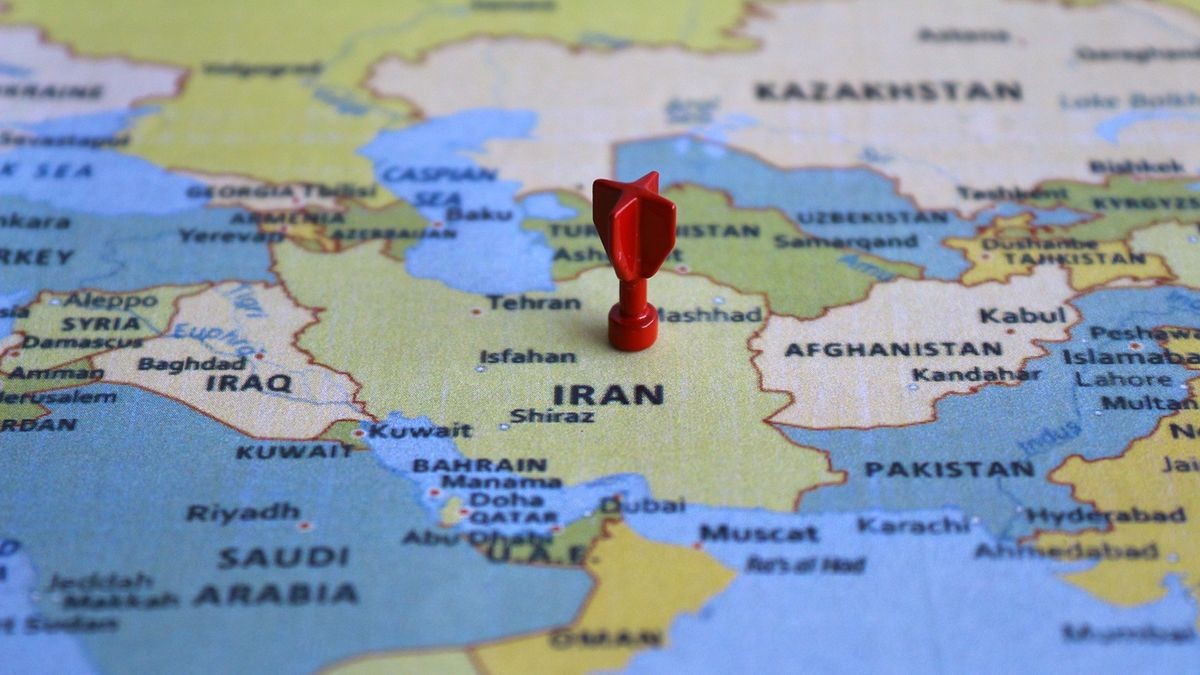
While often discussed in the context of Middle Eastern politics, the sheer physical scale of Iran is frequently underestimated. Covering approximately 1.65 million square kilometers (636,000 square miles), Iran is not merely a regional player; it is a massive landmass that serves as a geographic bridge between several of the world’s most critical regions.
A Sense of Scale: Comparing Iran to the World
To visualize the size of Iran, it helps to move away from abstract numbers and look at familiar geographic benchmarks. Iran is the 18th-largest country in the world and the second-largest in the Middle East, trailing only Saudi Arabia.
For those familiar with U.S. geography, the scale is striking:
– Iran is nearly as large as Alaska.
– It is more than twice the size of Texas.
– To match Iran’s landmass, you would have to combine Texas, California, Montana, and Illinois.
On a regional level, the disparity is even more pronounced. Iran is roughly four times larger than Iraq and approximately 80 times larger than Israel. This vast territory stretches over 1,000 miles in both north-south and east-west directions, creating a massive footprint in Western Asia.
Geography: A Crossroads of Mountains and Deserts
Iran’s physical makeup is defined by extremes, which has historically dictated where people live and how they move. The landscape is a complex mix of high mountains and arid plateaus:
- Mountain Ranges: The Zagros Mountains dominate the west, while the Alborz Mountains rise sharply in the north. The highest point in the country is Mount Damavand, reaching an elevation of 18,606 feet (5,671 m).
- The Iranian Plateau: Nestled between these ranges is a vast, high-altitude plateau characterized by deserts and basins.
- Water and Coastlines: Iran possesses nearly 2,000 miles of coastline. The northern border meets the Caspian Sea, while the southern coasts provide access to the Persian Gulf and the Gulf of Oman —two of the most vital maritime corridors for global energy trade.
Strategic Significance: Location and Resources
Iran’s importance is not just a matter of size, but of position. It sits at a crossroads connecting the Middle East, Central Asia, and South Asia. This central location has allowed it to act as a historical hub for trade and cultural exchange for millennia, from the ancient Persian empires to the modern era.
This strategic value is reinforced by two key factors:
1. Geopolitics: Sharing borders with seven different nations (including Iraq, Afghanistan, and Türkiye) makes Iran a central pillar in regional stability and conflict.
2. Natural Resources: The country holds massive reserves of oil and natural gas, making it a critical player in the global energy market.
Demographics and Society
Today, Iran is home to approximately 92 million people. Because much of the country is dominated by harsh desert landscapes, the population is not evenly distributed. Most Iranians reside in the western half of the country, where the climate is more temperate and economic activity is concentrated.
Tehran, the capital, serves as the nation’s nerve center. Located near the Alborz Mountains, it has evolved into one of the largest and most influential metropolitan areas in the Middle East, acting as the country’s political, economic, and cultural heart.
Historical Context: From Empires to the Islamic Republic
The modern state of Iran is the successor to a long lineage of powerful civilizations. The Achaemenid Empire, founded by Cyrus the Great, once exerted influence across much of the known ancient world. Later, the Safavid Empire played a crucial role in defining the borders and identity of the modern Iranian state.
A major turning point occurred in 1979 with the Iranian Revolution, which transitioned the nation from a monarchy to the Islamic Republic of Iran. This shift established a government led by religious authorities, deeply integrating Islamic principles into the country’s political and social fabric.
Conclusion
Iran’s combination of vast territory, diverse geography, and strategic maritime access makes it a foundational force in global politics. Its size and resources ensure that it remains a central, unavoidable actor in the affairs of both the Middle East and the wider world.