Yellow jackets are aggressive wasps known for their painful, multiple-sting capabilities. They transition from beneficial garden predators in spring to nuisance pests in late summer and fall, drawn to sugary foods at picnics and outdoor gatherings. While professional pest control is the most reliable solution for serious infestations, a simple DIY trap can effectively reduce local populations. Here’s how to build one:
Understanding Yellow Jackets
These wasps, easily identified by their alternating black and yellow bands, are 1 ½ inches long and widespread across North America. They become particularly problematic during warmer months when natural food sources dwindle. Their aggressive nature means they don’t hesitate to sting repeatedly if disturbed, making prevention key.
Why DIY Traps Work
The effectiveness of DIY traps lies in exploiting yellow jackets’ attraction to sweet, fermented scents. The traps use a liquid bait combined with a drowning solution. Once inside, the wasps cannot escape and drown, reducing their numbers over time. Consistent maintenance is essential for maximum results.
Materials Needed
- A 2-liter plastic soda bottle
- Scissors or utility knife
- 1 cup water
- 1 teaspoon dish soap
- 1 tablespoon apple cider vinegar or fruit juice
- Paper hole punch
- 2-3 twist ties
- Cord or wire (optional, for hanging)
Building the Trap: A Step-by-Step Guide
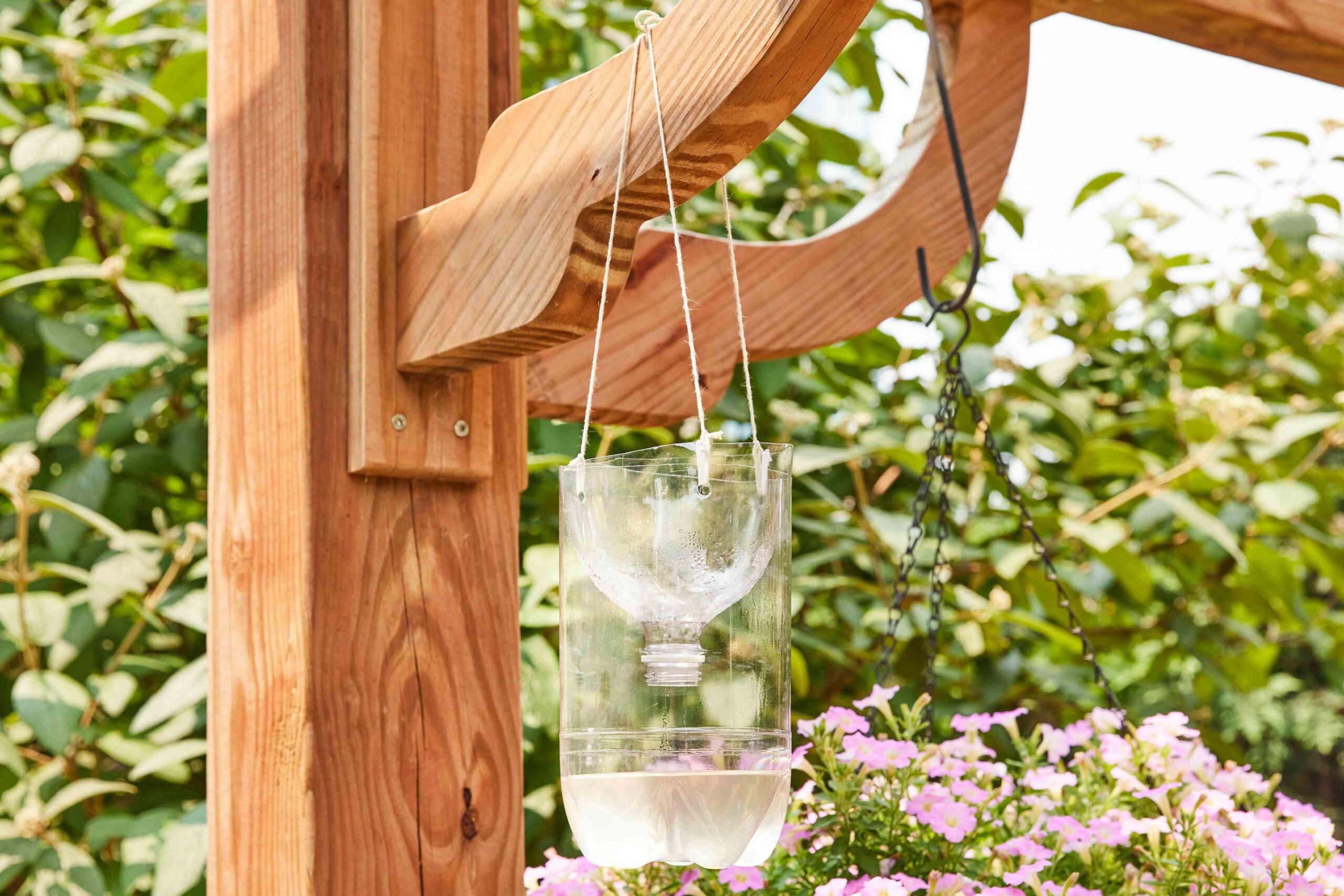
- Prepare the Bottle: Cut the top off the 2-liter bottle just below where it begins to curve. This creates a funnel-like upper section.
- Create the Bait: Pour 1 cup of water into the bottom of the bottle. Add 1 teaspoon of dish soap (which breaks surface tension, ensuring wasps drown) and 1 tablespoon of apple cider vinegar or fruit juice (the attractant).
- Assemble the Trap: Invert the bottle neck into the base, forming a funnel. Punch 2-3 evenly spaced holes around the top edge of the funnel. Secure it to the base using twist ties.
- Hang or Place: If hanging, loop cord or wire through the punched holes. Position the trap at least 20 feet from active gathering areas (porches, picnic tables) and at least 4 feet off the ground. Yellow jackets prefer temperatures around 85°F, so adjust placement for optimal sun exposure.
- Maintain Regularly: Empty the trap daily to remove dead wasps. A buildup of bodies can allow survivors to escape. Refill with fresh bait solution as needed.
Maximizing Effectiveness
To further attract yellow jackets, smear a small amount of jelly or syrup around the trap’s entrance. This enhances the scent draw.
Preventing Yellow Jacket Problems
Beyond trapping, proactive measures help:
- Cover Food: Keep all outdoor food tightly covered.
- Clean Surfaces: Wash picnic tables and patios after meals to remove food residue.
- Dispose of Fruit: Remove fallen fruits and vegetables promptly.
- Secure Trash: Use covered garbage bins and clean them often.
- Avoid Attractants: Floral perfumes, hairsprays, and brightly colored clothing can draw wasps.
If a wasp is killed, clean the area immediately, as crushed yellow jackets release pheromones that attract others.
FAQ
- Do Yellow Jackets Like Apple Cider Vinegar? Yes, the sweet smell attracts them.
- What’s the Best Bait? Sugary options like syrup, jelly, or fruit juice work well. Some people also use small pieces of bologna.
- Can I Use Wine or Beer? Yes, fermented drinks (especially sweet red wine) can be effective.
Conclusion:
A DIY yellow jacket trap offers a simple, cost-effective way to reduce local wasp populations. By understanding their behavior and maintaining the trap consistently, you can enjoy outdoor spaces with fewer stings. For severe infestations, however, professional pest control remains the most reliable solution.