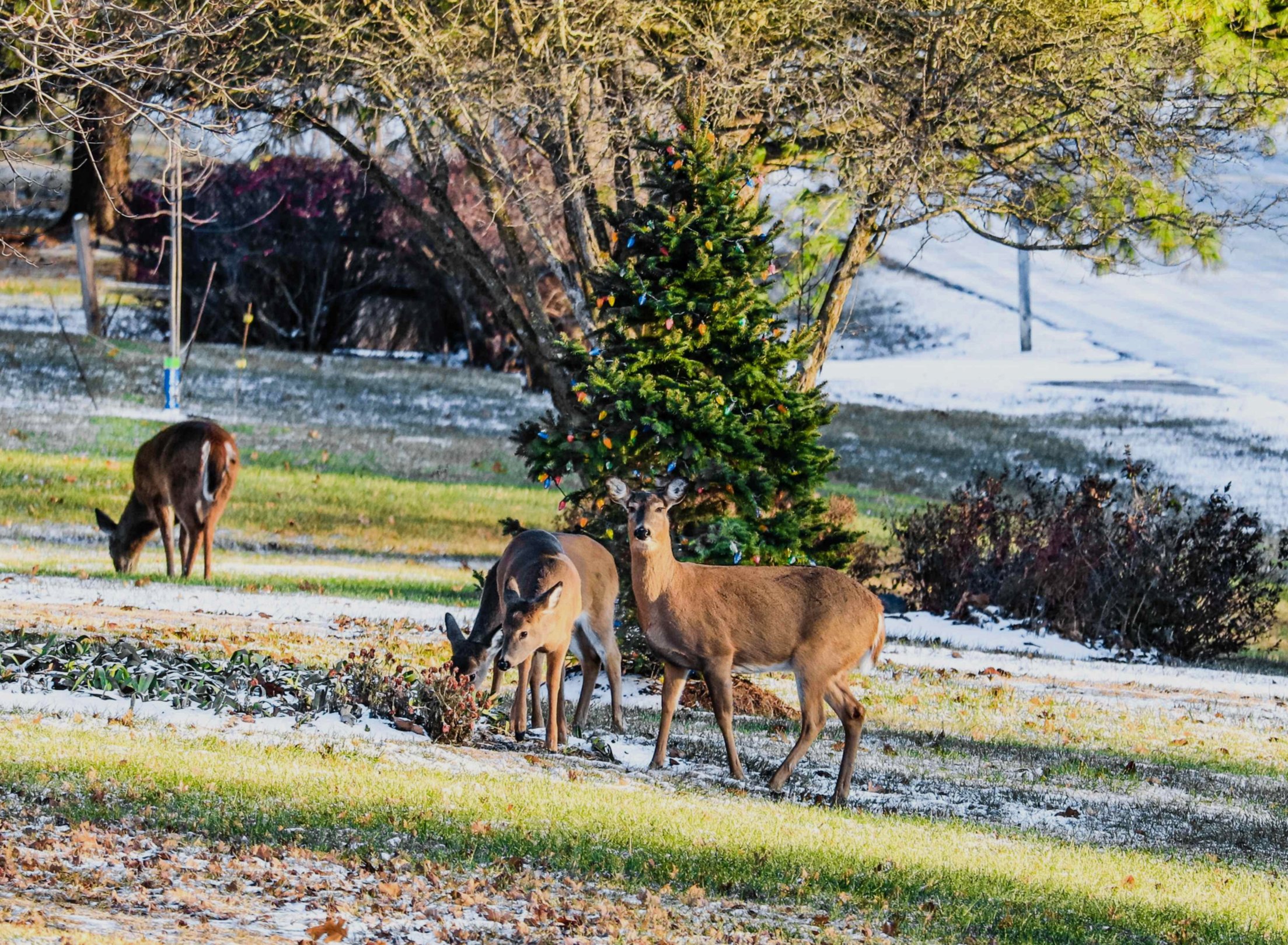
Many gardeners face the problem of deer browsing in winter, when food sources are scarce. Protecting plants from deer damage requires choosing species they naturally avoid. Here are seven plants that gardening professionals recommend for a winter garden deer won’t ruin:
Japanese Andromeda: Early Spring Blooms, Deer-Free
Japanese Andromeda is a broadleaf evergreen shrub that offers early spring blooms and attracts bees when little else is flowering. Deer avoid it due to its scent and taste, making it a reliable choice for a vibrant, yet protected garden.
Lorraine Ballato notes, “Japanese Andromeda is an evergreen with beautiful early season flowers that are bee magnets, as there is little for [bees] when spring breaks.”
Spruce: The Ultimate Evergreen Defense
Spruce trees are consistently deer-resistant, offering year-round greenery and structural interest even in winter. There are many varieties, including dwarf Alberta spruce, which Drake Decker recommends for its particularly stiff needles. Deer find these needles difficult to chew, making spruce a safe bet for deer-prone areas.
Decker adds, “Dwarf Alberta spruce has stiff needles that are difficult to chew, so deer typically give it a pass.”
Eastern Red Cedar: The Arborvitae Substitute
Arborvitae is often called “deer candy” due to its popularity among browsing animals. If you want a similar look without the deer damage, eastern red cedar is the answer. Deer rarely touch it, and some varieties offer golden-tipped needles for visual appeal.
Ballato suggests, “Eastern red cedar is a conifer that is rarely touched by deer, plus you can get it with golden tips or golden needles, but no flowers to speak of.”
Boxwood: Tough and Unpalatable, But Not Foolproof
Boxwood is a durable foundation plant that holds its shape under snow. Its strong smell and bitter taste usually deter deer, but in harsh winters, they may nibble on it as a last resort.
Decker warns, “Under normal winter conditions, deer might lightly nibble on boxwood. And in extremely harsh winters, deer might eat boxwood—only as a last resort, though.”
Japanese Holly: Winter-Tolerant and Deer-Resistant
Japanese holly resembles boxwood but is much more resistant to winter burn. It requires no winter protection and can benefit from mulch in the fall. Deer avoid it for the same reasons they avoid boxwood – its strong scent and bitter taste.
Ballato notes, “Japanese holly looks a lot like boxwood but is much more resistant to winter burn than boxwood.”
Mountain Laurel: A Burning Mouth Deterrent
Mountain laurel is another relatively deer-resistant option. The leaves burn deer’s mouths if they try to eat them, making them unlikely to repeat the mistake. For maximum protection, consider fencing.
Fencing: The Last Resort
Deer can jump up to 8 feet high, so tall fencing is the most reliable method of keeping them out. Even shorter fences deter deer that are only mildly interested in a plant.
Choosing deer-resistant plants is a practical step toward maintaining a beautiful winter garden. However, even the most unpalatable species may be tested during harsh winters when other food sources are scarce.