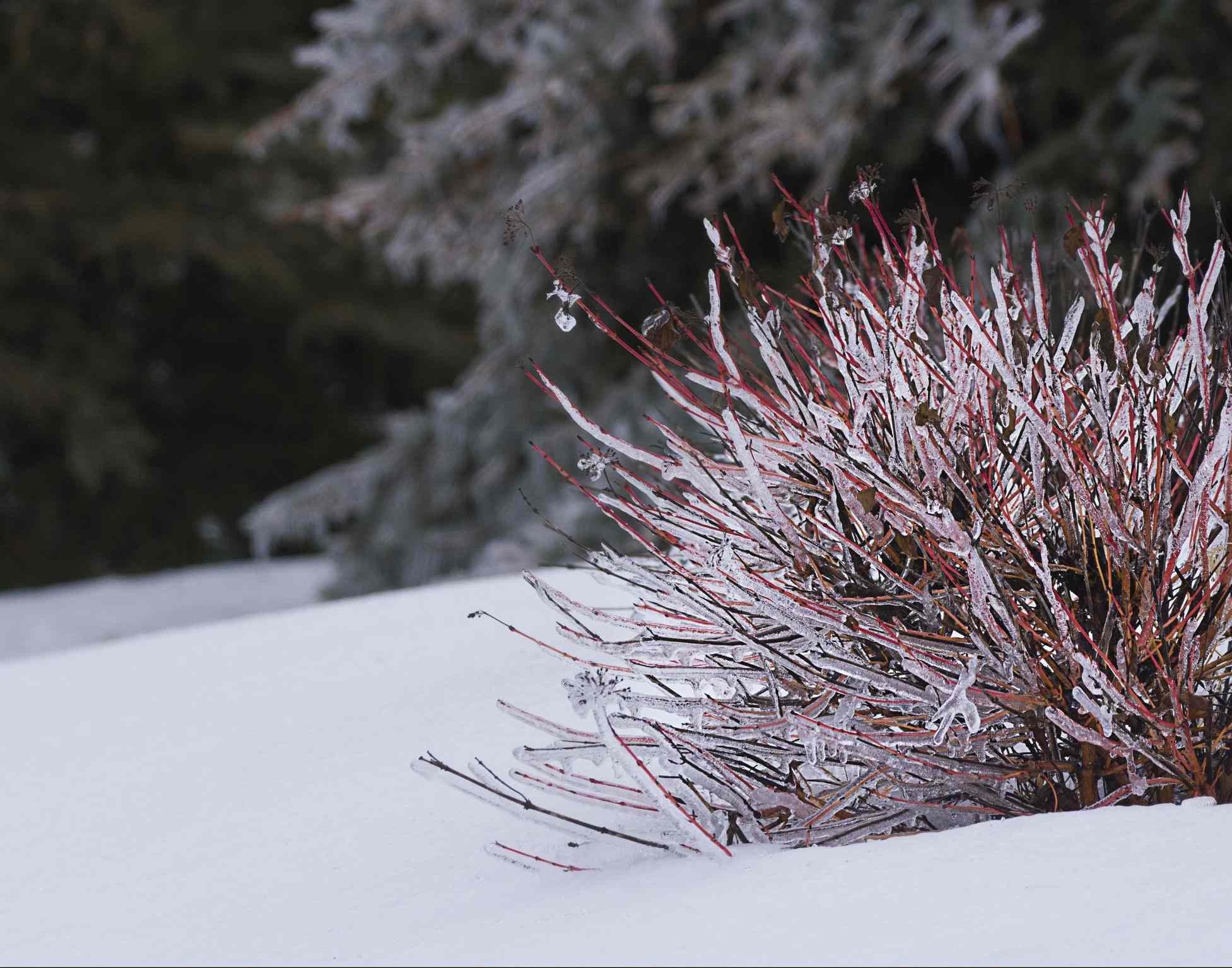
Icy conditions can look beautiful, but they pose a real threat to your yard. Heavy ice accumulation can cause branches to break, trees to bend, and shrubs to split. Knowing how to respond – and what not to do – is crucial for protecting your plants and ensuring your safety.
Why Ice is Dangerous for Plants
While many perennials can withstand winter storms, significant ice buildup creates excessive weight. Evergreens, with their large surface area and brittle wood, are especially vulnerable. Narrow-growing evergreens like arborvitae, juniper, and Leyland cypress are prone to bending, while shrubs like boxwood and yews can also suffer damage.
Some tree species are inherently weaker: Bradford pears, silver maples, pecans, willows, and Leyland cypress all have branches that grow at sharp angles or weak wood, making them more susceptible to breakage.
What Not to Do: Breaking Ice Off Plants
The most common mistake? Trying to forcibly remove ice. Never break ice off trees or shrubs. This will almost certainly cause additional damage. Even if a branch looks broken, attempting to snap it free can worsen the injury.
For large trees with broken limbs or trunks, intervention is best left to professionals. Your safety is more important than trying to fix a dangerous situation yourself.
Assessing and Addressing Ice Damage
Once conditions are safe, inspect your plants for damage. Bent branches will likely recover on their own. Small breaks within reach can be pruned later in the winter. However, broken trunks or large limbs on tall trees require an arborist – do not attempt to handle this yourself.
Low-hanging limbs on small trees can be temporarily supported with wood or stakes, but avoid forcing them back into shape. Arborvitae and similar plants may bow outward; use twine or rope tied to a stake to gently keep them upright.
Avoid spraying water to melt ice. This adds weight and increases breakage risk. If a tree has fallen onto power lines, stay away and call both your power company and a professional arborist immediately.
Preventing Ice Damage in the First Place
Proactive steps can reduce the risk:
- Choose resilient species. Select trees and shrubs appropriate for your climate and hardiness zone.
- Prune annually. Regular pruning removes dead wood and encourages stronger branching.
- Support vulnerable trees. Before a storm, tie branches together with twine to prevent splaying.
- Be mindful of placement. Note high-risk areas (like patios) under large limbs and move objects if a storm is forecast.
Ice damage is preventable with careful planning and timely action. Prioritize safety, avoid forceful interventions, and let nature take its course where possible.
By understanding the risks and taking appropriate precautions, you can protect your plants and enjoy the beauty of winter without unnecessary damage.